KGB – healers of human souls
Chapter 3 from Konstantin Preobrazhensky’s book KGB in Japan. The Spy Who Loved Tokyo, concerning the KGB’s competitor—the church, and in particular the case of organizing the Baptist schism, which subsequently got out of KGB control.
The KGB holds sway over people’s thoughts. Chekists search and bug apartments, can slip you “truth powder” in your tea, subject you to hypnosis, discover your innermost secrets. Power over people’s private lives corrupts many. That is why the Chekists, with what they believe to be full justification, call themselves “healers of human souls.” They learn with jealousy of the existence of other healers to whom people voluntarily confide all their hopes—the Church. The Chekists have zealously waged war against it for seven decades. The moral advantage in this war lies with the Church, but among its ministers there are also individuals ready to become informants.
This chapter will deal with priests in epaulets and Chekists who secretly receive baptism.
I
Every year on the first of September, the spacious corridors of the imposing buildings occupied by the counterintelligence service in all cities of our country fill with a crowd of young people dressed with particular care. Their short-cropped hair is neatly parted, and their jackets, carefully pressed or even brand new, are buttoned up military-fashion on every button.
These are graduates of Chekist schools, officially beginning their service on this day. Their training is brief, usually just a year, and consists of absorbing the intricacies of agent work. The young men acquired their primary specialties at civilian institutes, which they had graduated from not long before.
Who isn’t among them? Engineers, philosophers, doctors, even peat extraction specialists and sports event organizers. All these fields, like many others, interest the KGB, and it wants to have its secret representatives in each of them.
The newcomers are wary of their future colleagues and stick together in a tight group that, however, will completely disperse within a few days. The stern personnel officers pluck one person after another from the crowd and escort them to one office or another, swinging the doors open as a matter of routine.
The recruit’s astonished gaze takes in a cramped little room crammed with desks and clumsy safes painted brown. In a stern voice laced with patronizing mockery, the personnel officer introduces the newly-minted Chekist to the room’s occupants and leaves. The recruit, edging sideways along the narrow gap between cabinets and chairs, sits down at a free desk and lowers his eyes warily…
All the junior operational staff of the KGB—from lieutenant to major—spend their working hours in such offices. However, they try to be here as little as possible, devoting most of their time to meetings with agents in off-duty settings, at safe houses and clandestine apartments, or even right on the street. From being out so often, and in any weather, their clothes quickly lose their freshness, and sometimes there is not enough money for new ones: after all, KGB salaries, especially in provincial branches, are not that high.
But today they are all assembled and immediately begin pelting the newcomer with tricky questions. The essence of the questions is such that a normal person could not respond except in an anti-Soviet spirit—the very thing that, incidentally, constitutes the main goal of the KGB’s work! This provokes peals of laughter from the old hands, which can be heard from other offices as well. Such is the KGB’s tradition, meant to make the newcomers understand what they have actually gotten themselves into.

Savinkov
— Do you, for example, know how the famous revolutionary terrorist Savinkov died? — one of those present asks the recruit.
— Well, I think he threw himself out of a window of our internal prison on Lubyanka. At least that’s how it was shown in the film Operation Trust, — the newcomer replies cautiously.
— Then know this, dear comrade: four guards took him by the arms and legs, swung him, and threw him out of a fourth-story window! — the questioner admonishingly clarifies.
The recruit nods obediently. His brief experience in the KGB has already convinced him that absolutely anything can happen here…

General Alexander Kutepov
“And have you heard about the fate of General Kutepov? How, for instance, he died?” someone else asks.
The graduate of the counterintelligence school shrugs his shoulders in bewilderment, but isn’t embarrassed, because our literature really hasn’t told about this episode, perhaps the most important in the life of the white general. While vividly and angrily denouncing him in battles with the Bolsheviks on the fronts of the Civil War, it somehow kept silent about this period of Kutepov’s biography.
“Our comrades dissolved him in a bath of acid, on a steamer, while secretly transporting him from Paris to Odessa!” the comrades reported with restrained triumph, carefully watching the reaction of the interlocutor.
The newcomer frowns, looking at the floor, and for a second or two painfully ponders whether to believe this terrible slander against the Soviet regime, thereby provoking the good-natured laughter of his comrades.
And they continued to be open:
“By the way, our agents from among the White Guards helped to kidnap Kutepov! After all, a great many of them collaborated with the NKVD, which to this day is a big secret!..”
The young Chekist looked at the speaker with surprise and, smiling broadly, gasped: his professional vanity was flattered that not only in the West, but also in our quiet country, such chilling stories were happening, in which he too might someday become involved…
“Yes, by the way! It’s good that now you at least won’t have to shoot the head of our department!” someone said mockingly, as if guessing the newcomer’s thoughts.
“What, what?” the other asked in surprise.
Smiling meaningfully, the comrades recounted a little-known ritual of initiation into the Chekists, practiced during the years of repression.
Heads in the NKVD changed very often then. No sooner had they occupied a managerial office than they found themselves in the basement, and then in the execution room.
The leadership quickly realized that this procedure could be used to test new employees. The Party Committee approved this initiative, because it provided grounds to add another important touch to a Chekist’s party-production reference: “Ruthless toward enemies of the people.” The very same phrase, about ruthlessness toward enemies of the Reich, was also invariably included in the party-reference of Gestapo officers, as we all know very well from the famous film “Seventeen Moments of Spring.” About their own references, however, no one was informed…
The right to shoot the chief was considered an honor. It was supposed to be done with a personal weapon, received shortly before.
But the chiefs themselves were sometimes desperate people. One of them, who served in the Vladivostok regional administration and had himself shot his predecessors many times, knew perfectly well that he too could not escape this fate, and decided to die in such a way that it would become a legend.
In the execution basement there, at about elbow height, a thick iron hook stuck out of the wall, which could not be seen in the dark. When the chief was brought to execution, stripped, as was customary, down to his long johns, he imperceptibly hooked their linen waistband onto the hook…
The young Chekist fired, and the chief bent over but did not fall. He pulled the trigger again, but the chief only swayed to the side and again did not fall to the floor. The newcomer, in horror, pumped bullet after bullet into the chief until he went mad. At such a dear price, the chief’s dream was nevertheless realized…
After these words, the counterintelligence school graduate looked anxiously at his new colleagues and read in their eyes what he was thinking himself: that if those times returned, everything would happen exactly the same…
At this point, the questions ended. The newcomer was considered to have passed the exam. Now he was one of them…
The ability to commit deeds considered inadmissible for all other people gives us, KGB officers, a feeling of secret pride. It elevates us above the world. After all, we act this way in the interests of the Motherland! However, when fate brought us together with those who also commit forbidden acts, but not out of duty, but simply out of greed, stupidity, or mere spite, it is very easy for us to find an approach to them. The logic of their behavior is understandable to us, and it costs us no special effort to incline them toward cooperation.
On the contrary, a guarded, surprised, and therefore hostile attitude is provoked by those who never commit bad deeds, and first and foremost—the clergy, truly believing people. By word, deed, thought, hearing, smell, taste, touch, and all other senses they are obliged to refrain from unworthy actions, not to yield to devilish temptations. Their life is full of self-restrictions.
But man is a weak creature, and we, whenever an opportunity presents itself, always try to disturb his fragile mental balance, with a feeling of vengeful joy push him into the embrace of sin, for example by teaching a young Baptist to smoke and drink…
“This technique is used by us to recruit agents within Baptist circles,” a middle-aged instructor at the Minsk counterintelligence school was saying with a chuckle. “Sometimes we catch a budding activist of the Baptist movement with the help of the police and suggest that he go to the station, as if to verify his identity. What’s a Baptist to do? He obeys: after all, in the provinces there’s no one to complain to, all our authorities dislike Baptists. There, of course, they explain to him that a mistake occurred, they got the wrong man, we have no claims against you, but please go into the next room, comrades there wish to make your acquaintance…
And in the next room, we’re sitting there, drinking, we’ve put on police uniforms specially for the occasion. We invite him to sit down with us: we’ve never, they say, seen live Baptists before! He, of course, agrees, not suspecting that he’s already dealing with the KGB. He thinks he’s facing some foolish policemen and starts droning on with his usual talk.
And we tell him: ‘First, have a drink!’ And we pour something lighter, dry wine there, or even beer, so it doesn’t get him drunk.
He, of course, immediately changes in the face, stretches out his hands as if to ward it off, saying religion doesn’t allow it. ‘How can that be,’ we say, ‘after all, Christ drank! If you don’t believe it, look in the Bible!’ And indeed, this book contains a great many references to wine. In hot countries they drink it instead of water, because it quenches thirst better and, moreover, kills bacteria. In the USSR this custom has been preserved in Georgia.
‘If you drink with us, we’ll listen to your moralizing! Maybe we’ll even convert to your faith! Especially since none of your people are here, no one will see!..’ That’s how we work on him, you see.
It’s awkward for him to refuse: he’s young, while we’re all older. So he’ll take a sip for decency’s sake. We listen to him a bit, and then suggest again:
‘Come on!’ It’s awkward for him to object now: earlier, after all, it was all right to drink, and now it’s not? No, brother, once the claw is caught, the whole bird is lost!..
The instructor smiled triumphantly and continued:
‘And this guy was like a Komsomol leader among them, a valuable asset for recruitment. “Well,” we say, “off you go, you tell a good story. Maybe we’ll meet again!..”
After that we arranged a few more such chance meetings, accompanied by noisy feasts. We see that gradually he took a liking to it. Then we helped him hold a couple of youth rallies in the forest, in a clearing: after all, the police are driving the Baptists from everywhere!.. And here we had arranged with them not to interfere, but, of course, we scattered around our branches with microphones built in. You could hear perfectly!..
And generally, comrades, eavesdropping in the forest is not such a simple thing!” he concluded and laughed, apparently remembering something. “Not long ago, for instance, there was such a case. Several dissidents were sitting in the forest by a campfire at night and having a confidential conversation. And nearby lay one of our logs, we had managed to toss it in. A group of operatives from the Technical Operations Directorate was hiding not far away in the bushes and recording. Suddenly they hear—crackling in the earphones: the log had been thrown into the fire! And loss of operational equipment is considered a serious official violation. What to do? They decided to rescue it urgently! And just imagine the astonishment of the dissidents when the bushes rustled, several men jumped out and, without saying a word, began poking the fire, found the log they needed, and just as silently withdrew!..”
Waiting until our laughter died down, the instructor continued the story about the Baptist:
“Well, we let him listen to some of the recorded material. He finally understood everything and began to cooperate with us consciously. The Baptist leadership, meanwhile, decided that he really was such an outstanding conspirator, and made him the leader of the regional Baptist youth. And we were already in full swing teaching him to smoke!
We got hold of American ‘Philip Morris’ cigarettes! They aren’t sold in stores, and the head of the KGB department specially called the regional Party committee, asking them to help us acquire a carton of imported cigarettes at their buffet for operational needs.
We invited him to a safe house, open the pack, and such an intoxicating, delicate aroma spread throughout the room!.. We see: he’s smiling, but not so much at the smell of American cigarettes as at freedom! And he took a drag amid our encouraging exclamations. Then he began to smoke on his own… And then, as luck would have it, perceptive Baptists smelled the tobacco once, twice—and guessed that the KGB was playing games with him. They had a frank talk—and removed him from all posts! So we lost this agent, considered especially valuable. After all, he became a schismatic!..”
Seeing that we did not react at all to these words, the instructor, squinting slyly, continued:
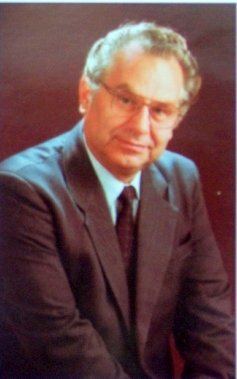
Gennady Kryuchkov — leader of the Initiative movement, who hid from arrest for 18 years, while his supporters were imprisoned.
— Have you heard anything about the split in the Baptist Church?..
We all shook our heads in the negative.
— No wonder, our press didn’t report anything about it! — the instructor smirked smugly. — And this split wasn’t arranged by the Baptists, but by us, the KGB! You see, we wanted to weaken the Baptists, to create two hostile groups! — He suddenly fell silent and seemed to deflate. Apparently, he had personally taken part in this split. Could it be that this failure was why he was sent here to teach?..
The instructor, meanwhile, perked up and continued his story:
— We drew up a plan, as required, got it approved by Comrade Andropov, and set about smashing the Baptists! But for some reason, the Baptists didn’t want to follow our plan! Although our agents within the Baptist leadership provoked a conflict and steered things toward a split, a good half of the believers up and went underground! We call them schismatics, but in reality they are the majority! What kind of KGB control over the Baptist movement is that! We lost a great deal of what we had! After all, we have practically no agents among the schismatic Baptists! And working in the underground, you understand, is difficult… If any of you ever gets to see a schismatic Baptist with your own eyes, don’t miss that chance, try to use it for your professional growth…
Such an opportunity presented itself to me, and very soon. After I, upon graduating from the Minsk school, was assigned to intelligence.
Most ordinary Chekists envied the intelligence officers, because intelligence officers had quite a few advantages by comparison: a higher salary, the ability to travel abroad, and, for reasons of secrecy, exemption from the onerous duties that all employees of the State Security Committee had to perform, such as: standing guard on the highway connecting the Kremlin to Sheremetyevo, in pouring rain, and in the freezing cold, while Brezhnev or Chernenko would pass back and forth; patrolling the dens of Moscow so that the next American president who came to visit wouldn’t catch sight of anything bad; or, finally, escorting the Chairman of the USSR Council of Ministers, Comrade Ryzhkov, to Chernobyl…
Ryzhkov himself, by the way, spent all of four minutes in the deadly danger zone and left, while the poor Chekists, lined up just in case along the government route leading to Chernobyl, were never thought of to be withdrawn, and they stood there for a very long time… They say they all received a certain dose of radiation, but not one of them lodged any claims with the KGB leadership. Whether to consider this act a sign of civic courage or, on the contrary, cowardice, I don’t know, especially since some of them now serve in the security service of Ukraine…
And only once was the entire intelligence staff called up for onerous duty. That happened at the end of the seventies, when explosions thundered in the Moscow Metro. The official authorities, as usual, hushed up these incidents as long as they could, but when rumors got out of control and the KGB, grudgingly, reported it to the Central Committee of the Communist Party, an official TASS statement followed, which was published in newspapers and indicated that the supreme power still did not fully control the situation in the country.
The victims themselves, in general, mattered very little to the Soviet leadership: they did nothing to rescue Soviet people from fascist captivity, and after the war they conducted nuclear weapons tests near residential areas, and then fiercely persecuted Academician Sakharov, who openly protested against this.
The explosions in the Moscow Metro worried the party leadership purely from a political standpoint. And so the KGB received a strict order: not to allow a single such explosion again, and to use all means to achieve this goal.

General of the KGB of the USSR Semyon Kuzmich Tsvigun — First Deputy Chairman of the KGB of the USSR (1967–1982), supervised the 3rd (military counterintelligence) and 5th (struggle against believers and dissidents) directorates of the KGB. Committed suicide by decision of the CPSU Central Committee.
That is precisely why Semyon Tsvigun, first deputy of KGB Chairman Andropov, was put in charge of this operation—he had never before dealt with such trifles as duty rosters, which were beneath his rank.
And since Tsvigun also commanded the intelligence service, it too, almost in its entirety—with the sole exception of the chiefs—descended into the metro and took up patrol duties there.
The patrolling was organized in the full spirit of our totalitarian state, aimed not so much at catching terrorists as at scaring off potential malefactors, so that no bourgeois radio station like Deutsche Welle would dare blab about explosions in the Moscow metro.
Every day, many hundreds of intelligence and counter-intelligence officers went down into the metro and rode back and forth on all lines until they literally felt sick to their stomachs.
Strictly speaking, we were ordered to walk the entire length of the train, looking for forgotten items or suspicious individuals capable of carrying out another blast, but after a few days it became clear that providing security in this way was impossible, and the overall atmosphere remained the same: edgy and tense, but with no signs of terrorism. Exhausted from fruitless attempts to buy at least some food or clothing in half-empty shops, passengers angrily jostled each other at the doors, picking verbal quarrels, but no one brandished bombs.
With professional intuition the young Chekists sensed that, by and large, the metro was calm and that the strict surveillance imposed over it would yield nothing anyway. So they sank onto the leather seats of the cars, took from their coat pockets books they had stowed in advance, and immersed themselves in reading. Thus, whiling away day after day over their books, they forgot, in their inexperience, that, like everyone in the KGB, they were under constant surveillance!
Before long, one of us was caught reading a book by one of the bosses, who had decided to make a spot check on his charges. Or perhaps one of the retired Chekists, who had lost none of their vigilance with age, happened to spot them. Then the hapless controllers from the KGB were given a serious grilling, put under surveillance so that later they could receive a grand dressing-down.
After that, we once again began walking from one end of the train to the other.
From the outside it looked rather comical: a well-dressed young man makes his way through a metro car, awkwardly casting wary glances around, while a little distance behind him, cutting through the crowd as easily as water, follow a trio of good-natured, nimble little men and a plain, middle-aged woman, clutching a shopping bag to her chest. All four confidently march along the carriage, tossing out as they go: “Step aside, ma’am!”, “Citizen, let the woman through!”, “Come on, move over, kiddo!” These people appeared not to know one another, but in fact they were linked by low-frequency radio communication, and a tiny earpiece and microphone were concealed under the collar of each person’s padded jacket…
Naturally, these efforts did not increase the workload of the duty chief, Tsvigun, by one iota; that work was done for him by his subordinates. He himself, a man of enormous size, continued to dine several times a day and then unhurriedly chat with the kindhearted doctors from the Kremlin Hospital summoned to his office.
All his phones were disconnected at those times, except one—a red phone sitting on a special stand bearing the inscription: “Brezhnev.”
It was precisely that phone the General Secretary of the multimillion-strong army of communists used to express his admiration for the film Seventeen Moments of Spring.

Leonid Brezhnev and Semyon Tsvigun, friends
— Senya, congratulations on an excellent film! he uttered without preamble, a phrase that instantly became famous, causing Tsvigun to nearly break into a smile.
“But did Tsvigun make this film?” you might wonder.
From the KGB’s perspective, yes. Because he was the film’s chief curator on behalf of the committee, which in the table of ranks stands far above Mosfilm. That is why Brezhnev made no mistake by calling him.
Tsvigun’s name also appeared in the film’s credits as the chief military consultant, albeit under the pseudonym Mishin, though the initials remained genuine: S.K. His consulting work, however, proved not at all difficult: a couple of trips to the film studio accompanied by a large entourage, a walk through its soundstages, and then presiding over the feast. The fee for such “leadership” was usually quite substantial, commensurate with one’s rank…

Mikhail Suslov — member of the CPSU Central Committee Politburo — party ideologist, “grey eminence” of the Soviet system, “Pobedonostsev of the Soviet Union”

Heydar Aliyev KGB
At that time, it was impossible to imagine that Semyon Tsvigun would die a terrible death, forced to commit suicide by none other than his old friend Brezhnev. I don’t know what exactly happened between them, but the country’s chief ideologist Suslov, who for some reason had a reputation as a great ascetic, said to Tsvigun:
- You are no longer needed; all that remains for you is to shoot yourself! — and threatened him with grave consequences if he did not follow his advice.
After this conversation, Tsvigun stayed in his office for about three days, receiving no one, and finally pulled the trigger…
The KGB immediately spread a rumor that Tsvigun had fallen victim to his own principled nature, allegedly having become suddenly outraged that Brezhnev’s daughter was exchanging rubles for dollars with private individuals, which at that time was considered a crime. But why, then, did he not deal with the much larger abuses of the era of stagnation—for example, the multimillion-dollar Uzbek cotton fraud? Moreover, any daughter, even the General Secretary’s own, was not a sufficiently serious adversary for the First Deputy Chairman of the KGB.

Vadim Matrosov — head of the KGB Border Troops of the USSR (1972-1988)
Tsvigun was buried without particular honors. The farewell ceremony took place at the KGB club and was led by the head of the border troops, Matrosov, who was junior to Tsvigun in rank. From his funeral speech it appeared that Tsvigun was merely a writer, not the second-highest official in the KGB: according to the fashion of those years, he had indeed published a couple of stories from partisan life, written by someone from the agent-writers and even included in the curriculum of Russian schools in Azerbaijan. In them, Tsvigun appeared under the name Dneprov. This highly flattering service for his vanity was rendered to him by an old Chekist friend, Heydar Aliyev, who became the head of Azerbaijan…
Heydar Aliyev KGB
But at the time being described, Tsvigun was still in power, and no one entertained thoughts of his impending end. By his order, some intelligence officers were required to stand duty at the Kursk Station, uncomfortable, huge, and foul-smelling, from which we tried to get outside at every opportunity.

Kursk Station, 1970s.
Especially absurd did we feel at night, sitting on benches in the empty waiting hall, from which the police chased out all ticketless people, while respectfully steering clear of only us.
The metro explosions had been blamed on Armenian terrorists, and our task was, upon the arrival of the Yerevan train, to flood the platform and meticulously scan arriving passengers for any suspicious individuals. Passengers getting off the cars, among whom Armenians were very few, looked at us with respectful surprise and fear, and only some smiled knowingly. We pretended not to notice…
Then we returned to the waiting hall.
But the operational work of the intelligence service was carried out not only on the platform and in the waiting hall. Some of us were detached to the luggage room to inspect items left there, and not only for detecting explosives but also for anything that might interest the KGB organs—first and foremost, anti-Soviet and religious literature, which at that time was sold openly from market stalls. Not only the “pernicious” writings of Sakharov and Solzhenitsyn but even the Bible, written several thousand years ago, was considered a serious crime and could substantially ruin the life of anyone in whose suitcase it was found. The fact that our great poet Pushkin, for example, turned to Ecclesiastes in his own work could not in the slightest serve as a mitigating circumstance. This question interested no one at all, though all Chekists did venerate Pushkin—but only in general, without reference to the Bible.
What then could be said about the appeals of the underground Baptists! They would have caused a fervor of fear and triumph in the station’s KGB branch.
And so it happened.
A stack of leaflets printed on a portable typewriter was found in one of the sacks and immediately delivered to the KGB branch. This branch was located in the same place as the deputies’ hall, in a side wing of the station adjoining the Kurskaya metro station.
Here privileged passengers could while away the time while waiting for their train, cosily settled in armchairs and sipping champagne.
To enter this hall is simple: one need only press an inconspicuous bell, and the elderly attendant in a black formal tunic, naturally our female agent, sitting at a little table in a pleasant semidarkness, upon glancing at you through the glass door, would immediately fling open the door before you. From somewhere she knew that you would not be going into the deputies’ hall, and in the vestibule you would press yet another button by a completely unremarkable door. Behind it lay the station’s KGB branch.
A spacious room—or perhaps it seemed so to me at that late hour? Walls whitewashed with chalk. The head of the branch, an elderly Ukrainian in an old-fashioned suit, was reading the leaflets, his brows sternly knitted, and in his dark eyes there gleamed a poorly concealed joy: here it was—material proof of the importance of the work he personally and his entrusted subordinates carried out. There would be something for reporting to the higher-ups. No wonder! For the branch, as a result of painstaking and, of course, targeted activity, had uncovered underground literature—leaflets! Yet at the same time completely harmless ones, and therefore promising no trouble to anyone: in short, precisely what the KGB hunted for above all!
The Baptist must be arrested so that later it could be colourfully portrayed on paper. A cunning plan was immediately devised, namely: when he came to the luggage room for his things, to tell him that his sack had been left unlocked, and to invite him into the police office to check its contents. And there, as if by chance, to discover these leaflets!…
Of course, one could have immediately kept the Baptist’s leaflets at the KGB station branch and then politely invite him there himself. But that would mean that the little KGB cells at all other stations of our boundless motherland were just as vigilantly conducting their invisible work. The political consequences of such a conclusion could be exclusively harmful.
That is why today we, several young intelligence officers, were sitting on a bench not far from the entrance to the police office, wearily drooping our heads. Yet another day was ending, pointlessly spent here in the station bustle, although we, desk officers, were not accustomed to such physical exertion. We were waiting for the moment the Baptist would be brought in, so that we could follow into the police office and, during the search of the sack, merely stand in the doorway, portraying either witnesses or simply having an intimidating effect on the Baptist. But, losing ourselves in a heavy half-slumber, we did not notice as several men walked past us. Only when the police door slammed shut behind them did we exchange frightened glances and quickly jump to our feet…
On the table already stood the disarrayed sack, and the Baptist himself sat next to it, smiling warily.
He was a thirty-year-old village peasant, deliberately ugly and poorly dressed: a little coat too small for his height and a worn-out ear-flap cap, crude, disproportionate boots. Only the lively, perceptive eyes on his tanned face with its leathery skin betrayed him as by no means a simple man.
The major from the station KGB branch reluctantly sifted through the sack’s contents. Due to the constant KGB bustle and haste, conditioned by the writing of enormous quantities of papers, he had not had time to put on a police uniform, although even if he had, he would still not have been able to deceive the Baptist. Aware of this, the major sighed heavily and frowned in embarrassment.
“So then, you believe in God?!” he at last asked with vexation.
“How else? One must believe, one must!” the Baptist answered with conviction, giving us, who stood at a distance, a conspiratorial wink. He had evidently quite adapted to the situation and felt quite comfortable; indeed, for this, it seemed, he required very little. He appeared not at all embarrassed by the sullen looks of those present. Smiling benevolently, he began to scrutinise us, trying to find some weak link to latch onto, and, of course, he discovered it in me! Scarcely glancing into my eyes, he immediately understood that I too believed in God, and that I was most carefully hiding this from my comrades. We exchanged brief, lightning-fast, burning glances! And not a single muscle on the Baptist’s face flickered.
“But there is no God, how can you not understand!” the Chekist uttered indignantly, closing the sack.
“Then who created the Earth?” the Baptist swiftly retorted, as if awaiting this question.
“No one created it! It came into being by itself!” the counter-intelligence officer answered bitterly, displeased at having to waste time on this foolish conversation while a multitude of far more important and urgent matters awaited him.
“Oh, really?” the Baptist objected, and suddenly began to speak in verses that struck us with amazement:
In my trunk there once had lain
A heap of ancient metal’s stain…
Everyone, holding their breath, gloomily stared at this strange man, including the station Chekist.
And the Baptist, inspired by our attention, was rattling off his poem in a patter, fearful that he might be interrupted at any moment.
The poem, written very simply and therefore easy to remember, told of an unusual philosophical dispute between two village dwellers, leisurely strolling along the outskirts after a working day.
One of them, professing materialism, asserted that all life on Earth had appeared of its own accord. In response, his friend—evidently also a secret Baptist, like the narrator—with a cunning squint recounted a parable about how in his trunk a heap of old metal had supposedly lain, rusting more and more. And suddenly movement began in the metal. After some time little pointers appeared, they began to rotate—and there you have it: a watch was born!
That tale of yours, go home and tell
It to a little child as well!—
his neighbour answered, also in verse, waving his hand incredulously…
The Baptist had already drawn breath, preparing to recite another stanza, when suddenly the station major decisively cut him off:
“All right, that’s enough of your performing! You’d better tell me this instead: did you serve in the army?…”
“Of course! In the airborne troops! I did my duty to the motherland. I served, of course I served…”
At that all of us took a new look at him and discerned the mighty shoulders concealed beneath the little coat.
“Oh-ho!” the major uttered meaningfully. “But Baptists don’t jump with a parachute! And they don’t fire a submachine gun! So it turns out you really are an underground activist. And that, by the way, carries criminal liability…”
The Baptist spread his hands with a smile, as if jokingly admitting his slip, though his situation was becoming far from safe. If they wished, they could now put him away in the camps for some twelve years. And yet it was he who looked at us with benevolent sympathy, and in the constant light turns of his bull-like neck, an inner freedom could be felt. A barely perceptible shadow, however, flickered across the preacher’s face as he tried to figure out whether his present arrest was accidental or part of a beginning massive campaign; whether surveillance had been placed on him before this and whether it had managed to uncover addresses of secret fellow believers he had visited in Moscow; whether he would now manage to send a secret alarm signal, or perhaps things were not yet so bad?… And despite all this, he continued to smile good-naturedly.
“That is exactly how a Soviet intelligence agent should behave!” I thought. A feeling of vague anxiety told me that something similar might happen to me as well.
And so it did, when several years later, in Japan, the local counter-intelligence caught me and, having likewise dragged me into a police station, conducted a very similar conversation…
At that moment, however, I was ashamed to be participating in this anti-religious spectacle.
Yes, Baptists do not recognise confession, absolution of sins, priesthood, and other sacraments of the Church, for which they are called Protestants. Yet at every liturgy, celebrated in remembrance of the Last Supper of Jesus Christ, Orthodox Christians reverently partake of the body and blood of Christ, into which bread and wine are mysteriously transformed, as a sign of deliverance from sins and a pledge of eternal life. It is sincerely a pity that Baptists reject this, and even the Old Testament, though it contains prophecies of the Messiah’s coming inseparably linking it with the New Testament. Nor do they venerate icons.
To be honest, it would be better if these Baptists did not exist in the world at all, just like any other sects that rip into pieces the once single body of the Church.
And yet right now it was the Baptist who was here my sole brother in Christ, whereas everyone else in this room were accidental people, deeply alien to me in spirit.
Nevertheless, I could not only not help my brother, but even send a friendly gesture that would have been immediately noticed by my colleagues…
And I myself might well have found myself in his place! But God, how I did not want to undergo persecution in our country, where, even when wishing to serve you, they humiliate and cause you pain. Where even a cleaning woman in a luxurious general’s sanatorium yells at you as menacingly as at her drunkard husband. Where the driver of a personal car is two hours late and, without a trace of remorse, announces that he went to have lunch. Where doctors, even in a special polyclinic for the bosses, speak in such an insolent tone that the patient’s blood pressure jumps. Where even in the Central KGB Hospital, a drunken nurse taking a blood sample thinks nothing of piercing a vein right through, and the chief physician, without batting an eyelid, would only exclaim: “But that’s Mashka! What else can you expect from her?!” Where, finally, even in Gorbachev’s mansion, a carelessly nailed curtain rod with a drape fell on his daughter’s head, nearly killing her.
If that is how they oblige even us, then it is easy to imagine the torments that must be endured by those whom they deliberately try to oppress.

The Americans were confronted with this most unexpectedly in 1983, when our fighter jet shot down a passenger Boeing belonging to a South Korean airline. The scandal then exploded around the world, and its echoes can still be heard today.
Not knowing how to spite the Soviet leadership for its inhumane step, the American authorities then took a rather absurd decision, clearly missing the mark: to boycott Aeroflot flights and refuse to accept its airline tickets for payment. The victims of this policy were mainly Soviet officials, since it was they who were the primary passengers on Aeroflot’s international routes; Aeroflot, of course, was not a state airline, as it officially styled itself, but a typical Soviet ministry, with numerous party committees and KGB officers in every department. The GRU military intelligence also held strong positions within it.
This discriminatory gesture by the Americans did not at all affect the interests of the top Soviet leaders: if they wished, they could fly anywhere in their own aircraft. As for the economic damage the Americans were counting on, here, too, they miscalculated: for any sensible person understands that the economy in itself plays no role in our state, and only the political effect matters. Even if we were to suffer a financial shortfall, we would cover it with a powerful propaganda campaign, accompanied by the secret sale of gold, which specially trusted pilots from the government flight detachment would, in such cases, always fly to the West by the planeload.
In short, the Americans had foreseen the economic effect of their action—though their hopes were not fulfilled—but they failed to take into account its behavioral effect.
Touchy about everything concerning their prestige, the Soviets decided to answer the Americans blow for blow and instructed Aeroflot likewise to refuse to issue tickets issued by U.S. airlines.
Naturally, among their passengers there were not only Americans but also citizens of other countries, except the Soviet Union, whose subjects were forbidden from using the services of foreign airlines—for which, incidentally, their salaries would not have sufficed anyway…
Thus began a brief air-ticket war, in which the forces were unequal: while American ticket agents expressed their refusal to Soviet citizens in a correct, albeit very cold, manner, our cashiers yelled at the Americans so frightfully that they immediately retreated. Never in their lives had they encountered such treatment; they could not grasp what on earth was going on.
The cashiers smirked contentedly:
“We don’t stand on ceremony with passengers anyway, but if the Motherland has specially given us such an order, then watch out, enemies!”
This was told to me by a certain intelligence officer who served under Aeroflot’s “roof.” And another friend of mine related this.
In our KGB there are two camps for prisoners: “Dubravny,” in the Mordovian ASSR, and “Skalny,” located somewhere in the North, I think in Komi. In the first of them the regime is slightly lighter—if only because the climate of the Volga region is not so harsh. Both camps for some reason come under the archive department of the KGB.
My friend once visited “Dubravny,” meeting there with an exposed spy and, apparently, hoping to use him in the interests of our intelligence. Two things struck him in that camp: the doom that could be read in the eyes of the inmates, among whom were many Baptists, and the dreadful smell of the fish they were fed.
And another acquaintance of mine, a scientific worker, for several months fulfilled the duties of a people’s assessor in a district court. The Party committee of his institute had assigned him this task, since non-Party people are not sent to such a post. The assessors, delegated to the court by labor collectives, were supposed to obey the judge in all decisions and keep quiet.
One day a young dissident was tried there and sentenced to a rather long term—almost eight years in prison.
“Maybe we could still make it a bit shorter?” the assessor ventured to ask the judge.
“What for?” the judge smiled. “He won’t come back from the camps anyway; they’ll take care of that there!..”
“No way!” I thought. “I’d better keep quiet about my views and live under Soviet power—which, by the way, the people fully approve of. Soon I’ll go to Japan, spend about five years there, and return as a major. Later, using my father’s numerous connections, I’ll transfer to the Administrative Organs Department of the CPSU Central Committee, which oversees all the security structures and where even a junior clerk invariably holds the rank of general. After that I’ll return to intelligence as a senior leader and go to Japan as a station chief. At worst, his deputy: any lower position would be beneath my rank.
And fighting this government is pointless anyway!..”
As he handed the traveling bag to the Baptist, the station major suddenly asked loudly:
“When does your train leave?..”
“In just two minutes…” the Baptist answered in a serene tone, as if it were not his train that was leaving but some other one, and he himself had only dropped by the police station to recite his little poem. He remained as calm and good-natured as ever, like a psychiatrist talking to his patients.
All of us were somewhat weary from our duty at the station and sat with our heads hanging. The Baptist, meanwhile, kept glancing at me, apparently trying to guess the course of my thoughts, for our perception of the world was still the same. With a sympathetic sigh, I raised my hands almost imperceptibly, showing that I could not help. The Baptist answered with a grateful smile…
“Run!” the major suddenly commanded, and, grabbing the Baptist’s bag, he was the first to dash out of the room.
A few seconds later we were all running along the platform, holding in our hands who the Baptist’s bundle, who a string bag stuffed with sausage. The preacher himself hurried after the major, his boots thudding deafeningly, looking very much like a provincial locksmith and, most likely, actually having been one.
The Baptist clambered heavily onto the steps of the train that had already begun to move, and we vied with one another to toss his things into the vestibule. All this was done in silence; only our ragged breathing could be heard. The Baptist seemed no longer to notice us, shifting his bag deeper into the vestibule. “At parting I would have surreptitiously shaken his hand”—that is probably how a writer unacquainted with the ways of the KGB would have ended this story.
Alas, by no means could I have done that! No matter how exhausted my comrades were at that evening hour, they would certainly have noticed everything and exchanged puzzled glances. And my fate would have been sealed at that moment…
Soon the train disappeared into the darkness, and we trudged back.
“So, what will become of that Baptist now?” I asked the major as if casually, while he stood at the edge of the platform with a worried look. At first, just in case, I had even wanted to say “of that artist,” but I thought better of it.
“Well, tomorrow we’ll send a notice to our comrades at his place of residence; you see, there was too little incriminating material today. Besides, we must also find out the names of all those with whom he is connected!..”
“I see!” I drawled in an indifferent voice and quickly walked away, so that the major would not think to ask why I needed all this: after all, any Soviet serviceman, and especially a Chekist, is supposed to regard religion as a sort of whim.
II
Indeed, most of us regarded believers as half-wits, uncultured people incapable of rising to the heights of a scientific worldview. They were openly despised, considered second-rate individuals, much like the sick or the insane. Yet whenever the KGB received information that a Doctor of Sciences or an academician was attending church, they would raise their eyebrows meaningfully, seeing in it a cunning form of political protest.
The Chekists perceived the activities of the clergy in exactly the same light, viewing them as merely an unusual, exotic, and outwardly even very beautiful form of anti-Sovietism.
The easiest in this regard were the Jewish rabbis, who in our eyes appeared as Zionist ringleaders, and the tasks of combating them were perfectly clear. The religious content of their work, which from the rabbis’ own perspective was the most important thing, held no interest whatever for the Chekists. They viewed it as theatrical scenery for Israeli espionage. In the secret dossiers kept by the KGB on activists of the Jewish movement, the fact that some of them belonged to the clerical estate was mentioned in passing, at the very end of the questionnaire, as an insignificant detail, a kind of hobby. Many provincial Chekists did not even know the meaning of the word “rabbi” and mangled it as best they could in their reports to Moscow when informing about foreign tourists arriving in their cities.
It was all clear with the Muslim mullahs too, who merely masked nationalist activity in the Central Asian republics with quotations from the Koran.
The only unclear matter was that of our Russian priests. The priests were not conducting any hostile activity, and deep down everyone knew it. They belonged to a vast and, despite everything, still powerful Orthodox Church, and by that very fact they set themselves in opposition to the state. Because, as the American press maintains, the Church is the only fortress in the USSR that the communists have not been able to take…
And truly, the Church did not officially embrace communist ideology, which in our country was astonishing in itself. For even in journals such as Urology, Chess, and other narrowly specialized publications, the lead article was invariably devoted to the latest congress of the CPSU. But at the same time, the Church did not speak out against communism either, taking a position of conciliation.
Evidently, it took no heed of a far from casual statement by the proletarian writer Maxim Gorky that “he who is not with us is against us.” For this reason alone, the Church acquired the character of an ideological enemy, and therefore it had to be constantly harassed, undermined, weakened with the aim of destroying it… but the counterintelligence officers had no especially deep conviction that this cause was right.

Patriarch Alexy (Simansky) and Chairman of the Council for Russian Orthodox Church Affairs under the USSR Council of Ministers, KGB Major General Vladimir Kuroedov (left). 1962.
Nevertheless, this work was carried out on a massive scale and encompassed the entire country. It was directed by Lieutenant General Kuroedov, who held the post of Chairman of the Council for Religious Affairs under the USSR Council of Ministers. Of course, his general’s rank was not revealed, but the priests knew it very well — apparently from other KGB officers who, like me, secretly confessed Christianity.

Philip Bobkov and Vladimir Putin
But even he was not the most senior in this work, being subordinate to the Deputy Chairman of the KGB, Bobkov, who oversaw other ideology. The goal of the KGB’s work against the Church was to flood it with its own agents in order to subvert it from within, in particular so that people with tarnished reputations, who were easy to manipulate, would be appointed to the highest episcopal posts. According to the KGB’s plan, the Church was to destroy itself from within, but not to the ground, so that there would still be something left to work on…
«We must not press the churchmen to the point that they finally go underground. There’s no need to tighten the screw all the way!“ was what the officers of the KGB’s Fifth Directorate, who handled Church matters, explained to us young Chekists. However, they tried not to use the very word “Church,” lest someone who accidentally heard it might think the KGB was engaged in anti-Soviet activity. It was replaced by a gesture—the Chekist would lightly tap himself on the stomach with the edge of his palm, roughly at the level of the belly, hinting at a priest’s long beard. To an uninitiated person this gesture was still not really understandable, and so a KGB officer, even while jolting along in a crowded tram, could smile and say to his friend, “Today I held an event on ‘these’!”—accompanying his words with the gesture described… Deep down, though, Chekists felt no particular animosity toward churchmen—rather, they even had a certain respect. “Priests are experienced recruiters!” one could often hear within the KGB walls, and this phrase was uttered in quite a friendly tone. In this sense, KGB officers regarded priests as somewhat their equals. And indeed, when a Chekist sometimes dropped into a church on business, he would give a knowing snort, seeing how after the service the priest would chat for a long time with parishioners about something. He had no doubt that these conversations were of a recruitment nature, conducted exactly as in the KGB and other secret services—that is, consisting of enticing promises, false hopes, and signs of friendly disposition, interspersed with ambiguous hints and threats. The priests’ goal was to recruit believers who would then bring money to the Church. Hand on heart, every Chekist believed that in actual fact priests did not believe in God, for how could an intelligent person—and priests were undoubtedly such—take all this nonsense at face value? In private conversations, Chekists often discussed this problem. It must have brought them a sense of unconscious reassurance. “For example, out of twelve priests in the Yelokhovo church, only one is a believer, and even he is the oldest!” someone would exclaim joyfully, and I would catch with surprise notes of self-persuasion in his voice… And the Church itself was perceived as a certain political force or even a mafia, and in such a form it acquired the right to exist, even if only as a political enemy. Yet it was precisely the recognition of this fact that led to disillusionments, and the fault lay with a deep acquaintance with the priests designated for recruitment… Recruitment, as is well known, is preceded by the establishment of personal friendly relations. Waylaying a priest on the street as he was returning home, the KGB officer would present himself in proper form and propose a meeting to talk over a glass of wine about important matters of life. The priest would agree with surprising ease, which some Chekists attributed to their professional skill, not knowing that pastoral duty bid him converse with everyone, including representatives of the authorities. “So I ask him: ‘Father Anastasy, do you drink vodka?’ And he answers: ‘If it’s without w-women, then in unlimited quantity,’” a young officer of the Fifth Directorate recounted among friends, choking with laughter, perfectly imitating the priest’s “o”-tinged intonation. In close company, priests turned out to be very talkative and witty people, inevitably becoming the life of any gathering, including one made up entirely of Chekists. It seems that clergymen, like the aforementioned Baptist, felt completely at ease in any society. Moreover, it turned out that they perceived the world somehow detachedly. This circumstance gave rise to a distinctive and very subtle priestly humor, so that any feast, whose willing or unwilling head became the priest, would now and then resound with explosions of laughter. But as soon as the conversation took on a completely relaxed character, the priests, in a friendly and delicate manner, immediately began to win the Chekists over to their side and lied so coherently that it truly seemed as if God exists and one must believe in Him. “Priests are very cunning!” was the conclusion the KGB chiefs would later draw, and they called upon their subordinates to exercise ideological vigilance. Those, observing the priests secretly from the crowd of believers, noticed with amazement that during sermons their voices trembled without pretense and at times tears flowed down their cheeks. Only an experienced actor could pretend like that, but for what purpose?! After all, priests did not earn all that much, and besides, it turned out that the Church itself had no powerful financial patrons. With bitterness one had to admit that the priests really did believe in all that nonsense: miraculous healings, the afterlife, myrrh-streaming relics of saints, and even in resurrection from the dead, which completely contradicts science. It turned out that they had indeed come to serve the Church not for money, for by running a vegetable stall, and without being persecuted for their faith to boot, they would have earned many times more. The sober Chekist mind refused to admit this, and everything incomprehensible always seems especially dangerous and harmful to us. Perplexity was also aroused by another circumstance, little known outside the KGB and kept in the strictest secrecy. It turned out that those few KGB officers who were successfully infiltrated into the Church, passing themselves off as priests, fell under its influence and actually became priests. This caused terrible irritation in the KGB. Although the infiltration itself was not at all difficult. The KGB simply, through the Committee on Religious Affairs under the USSR Council of Ministers—which was essentially one of its subdivisions—arranged with the Patriarchate for several Chekists, camouflaged as church workers, to work in the foreign representations of the Church and in the patriarchal residence itself. The Church, understanding perfectly well that it had nowhere to turn, agreed; all the more so because the KGB was just one of the links of state power, with which one cannot be at enmity according to church statute. On the contrary, one is supposed to offer prayers for it during every church service. And besides, could the not-so-malicious Leonid Ilyich Brezhnev be compared to bloody Nero, for whom, in spite of everything, the Church also prayed at the dawn of Christianity, seeing in him a kind of divine trial?.. For work under the unusual church “cover,” especially reliable young officers were selected. Preference was given to those who could have no ideological wavering at all—military men, graduates of the small number of purely military schools under the KGB: two border guard schools, one combined arms, one political, and the communications school. At the sight of any ideological enemy, their eyes would fill with fury—something that did not happen with officers from operational subdivisions, who were distinguished by a certain softness. Sometimes, though, these too fell under the church “cover.” Some began their “church career” at the Theological Seminary, others at the age of about thirty, already holding the rank of captain. The majority were of this sort. Gnashing their teeth and growling with disgust, they studied theology in safe houses. And they were taught by a real priest—our agent, naturally, wearing lay clothing. At these lessons he also felt not entirely comfortable, fearing an accidental meeting with someone from his flock. Any teaching absorbed reluctantly leaves no perceptible trace in the souls of the students, and so it was not difficult for a priest or even an educated believer to understand that his interlocutor in a brand-new cassock was not a real clergyman, but a fake one. Yet no exposures occurred, because everything was known in advance. For if a person comes to serve the Church not by order of the head of the KGB’s Fifth Directorate, but by the call of the heart, his path tends to be long and full of obstacles, especially numerous precisely then, in the years of stagnation, when the militia in Zagorsk would intercept young people heading for the entrance exam to the Theological Academy and detain them for a time in order to have time to report to the bosses that there were no applicants wishing to study there. Most of the churches were inactive, the number of clergymen was few, and for them the type of a fellow church worker who suddenly dropped out of the blue and whom no one had ever met anywhere before was entirely unimaginable. The KGB knew this and therefore placed its main stake not so much on the concealment of its officers in cassocks as on the fact that the priests would keep silent anyway. And so they did, though in private they sometimes let slip caustic jokes at the strangers’ expense: “Do you even know, father, in which hand to hold the cross? Mind you don’t disgrace yourself, or we’ll be ashamed for you…” But the Chekist who was mocked in this way somehow began to feel drawn in spirit to his new comrades, forgetting his old ones. Very quickly he fully succumbed to their influence. The reasons for this remained unclear, no matter how the analysts of the KGB’s Fifth Directorate tried to understand them. Probably they lay in the fact that beneath the painted vaults of the church a spiritual clarity reigned, and for the first time in their lives KGB officers did not have to dissemble. Also, something elusive was felt there, something tenderly drawing the soul and constantly growing stronger in contact with the clergy—that was the most important thing that there is in the Church: its mystical connection with God… Summoned for a report to the KGB, a Chekist-priest would look at his superiors with eyes as clear as crystal but completely alien, and tried in passing to instill Christian ideals in them. They, being excellent psychologists, understood this but could do nothing, for it was forbidden to change such valuable employees often, and so they only silently gnashed their teeth. However, after serving under the church “cover” for the appointed term, the priest-officers did return to the KGB’s central apparatus and again sat down at the desk in one of the cramped offices. Their comrades rewarded them with the contemptuous nickname “Archpriest” and laughed at their soulful manner of speech; their superiors used them mainly for translating articles from foreign magazines… Thus the KGB demonstrated its rejection of the power of the Holy Spirit and in every possible way guarded its subordinates from it. For them there was no greater sin than to be suspected of faith in God. This sin seemed more terrible than espionage for foreign intelligence services, since a spy can be persuaded to become a double agent and work for the KGB. But these “priests against their will” were now considered completely finished people. Any exhortation of them was regarded as useless. This served as indirect proof that the KGB itself serves not the motherland as a whole, but only the Communist Party, and its activity is deeply ideological. He who has come to believe in God can no longer profess the communist ideology, which does not unite but divides people, instigated by the devil. Thus, a believing Chekist becomes an internal enemy and a saboteur more dangerous than an American spy. Therefore the KGB leadership, while by and large not worrying about the ideological reliability of the majority of its subordinates, regarded with a morbid gloom that insignificant minority which dared to take the religious path. The mere striving of a person to expand his knowledge of religion, not by order of the bosses but by his own will, was considered in the KGB an ideological crime and was called: “heightened interest in religion.” Since such intransigence exceeded not only the constitutional limits—which no one seriously took into account—but even the far stricter party limits, it was kept secret, which caused even more grievous torments to those suspected of it: after all, officially no one explained to them the reason for their sudden dismissal. Even a high-ranking boss could suffer from it. Because doubts in the communist faith were not forgiven to anyone. I remember how in the 1960s a retired head of the political directorate of the KGB border troops, a general, could not for the life of him understand why his former colleagues had stopped associating with him. As a true communist, he suspected nothing, and the word of the party remained sacred to him as before. Could even such a simpleton have been suspected of heightened interest in religion?—I wondered until I became acquainted with his officially patriotic novella, which he was allowed to publish in the departmental magazine “Border Guard” only ten years after his dismissal. Written in the labored bureaucratic language of official papers, dull, it certainly merited no reader’s attention, and indeed was impossible to read at all. I managed only the first two pages—but even in them I sensed a heightened interest in religion! This novella began with a dreary description of a graduation ball at the Moscow Border Guard School, in which church terms appeared that were thoroughly uncharacteristic of the world perception of a true Soviet person. For instance, someone’s bride, invited to the ball, had an excessively high hairdo which displeased the young officer hero of the story and seemed to him like a monastic klobuk, although even such a word must have been unknown to the author, for in the Land of the Soviets monks cannot exist by definition! Moreover, the author compared a chandelier to a polycandelon, and the white birches outside the window to church candles… No, this general was dismissed for a reason after all. Deep in his soul, he most likely really was drawn to God, and this would involuntarily manifest itself in contact with his fellow political workers, whom he considered true friends. Thus the Lord sent him a trial whose outcome could be either admonition or total darkness. But for those few KGB generals who were aware of their own faith in God and carefully concealed it, things went all right. I remember how one day my father returned from a business trip to Siberia, to the Chinese border, joyfully excited. He recounted that several soldiers had accidentally found a pair of small church bells covered with moss in the taiga. They dragged them to the outpost, cleaned them, and put them in the woodshed. They even started using one of the bells for its intended purpose: striking it with a piece of iron, they would summon people either to lunch or to the evening formation. The melodious, soft ringing carried far around… These bells turned out to be so valuable that one of the local dioceses became interested in them. “Well, and which diocese? And what did these bells turn out to be, how did they end up in the taiga?” I asked excitedly. “Are you crazy!” father smirked sarcastically. “If I had asked even one question, they would have immediately pinned heightened interest in religion on me! I was only able to glance at the bells themselves in passing, when I went with a group of officers to inspect firewood storage. If you want to hold a high position in our system, then with all your behavior you must affirm that religion is finished forever and you fully approve of it. Otherwise the question of your fitness for service will arise…” Yes… If even an interest in bells found in the taiga is dangerous, then what could a KGB officer’s visit to a church, say, be fraught with? In that case, his career is ruined. However, the same thing happens to an army officer accidentally caught in church: he is expelled in disgrace. But de jure the fate of a Chekist is heavier: upon dismissal he is placed on a KGB register as a politically unreliable element, a dissident who, in the KGB’s opinion, has betrayed the Socialist Motherland. All his life prospects become closed, and he may not even be hired as a driver at a state motor pool, because its personnel department will certainly ring up their colleagues at his former workplace, the KGB, and there they will recommend abstaining. After that, an accusation of parasitism and even imprisonment not infrequently follow. From the standpoint of Soviet logic, such a harsher punishment is natural: after all, a Chekist stands far closer to the party secrets of the CPSU than an ordinary army soldier. While entering a military academy is relatively easy—they accept you even with bad marks, as long as your health is in order—a prospective cadet of a KGB intelligence or counterintelligence school is checked by dozens of people in different parts of the country, and not only him alone, but all his relatives down to the third degree. A person entering the KGB service needs several written recommendations from high-ranking chiefs, something unheard of in the army. Moreover, the guarantors bear responsibility for their protégés and are punished if their protégés fail to justify their trust. Can you imagine the ridiculous position an inflated materialist general finds himself in when his protégé turns out to be a believing Christian? Perhaps he himself, like the former head of the border troops’ political directorate, is experiencing a heightened interest in religion? Let’s, the KGB decides, check this out! And even if the check yields nothing and the hapless general proves to be a rock-solid communist, his personnel file will still contain the entry: “checked in connection with heightened interest in religion.” Will he receive his next promotion after that?.. Such cases, however, were extremely rare, although even here an internal gradation existed. If a counterintelligence officer, exposed or suspected of belief in God, was only expelled with disgust, an intelligence officer, an employee of the KGB’s First Chief Directorate, would be placed in the category of potential traitors to the Motherland, for which, incidentally, capital punishment is prescribed. Religiosity in the intelligence service was considered the first step toward treason, which in legal language can be qualified as preparation for a crime or its intent, which likewise entail legal sanctions. “A believer means a traitor”—such a profound conclusion was drawn by the head of intelligence, Kryuchkov, after two major intelligence officers who defected to the West in the 1980s turned out to be secret Christians. This purely formal and superficial logic is very characteristic of the KGB, which avoids getting to the bottom of phenomena that do not testify in favor of socialism. The deputy head of the KGB station in Morocco, named Bogaty, who directed political intelligence there, was, as it emerged, a secret Baptist. Only after he defected to the USA did the KGB learn that before that, in Moscow, he had visited the prayer house of Evangelical Christian-Baptists, located not far from Sretenka, several times with his family. Stanislav Levchenko, a “New Times” correspondent in Tokyo and an employee of the 7th Department of the KGB’s First Chief Directorate, secretly attended the local Orthodox Cathedral of Christ’s Ascension, about which the KGB was likewise informed after the fact, apparently through its agent network in the Japanese police. This last circumstance was especially important for me, since I too, a Soviet intelligence officer and TASS correspondent who arrived in Japan shortly after Levchenko’s defection, had also, on the sly, repeatedly stopped at this cathedral for solitary prayer… Of course, at none of our official gatherings in the KGB station at the Soviet embassy was Levchenko’s religiosity mentioned. On the contrary, it was carefully hushed up, and the KGB closely watched to see whether any of us might inadvertently reveal his own adherence to faith. Naturally, I would never have breathed a word about it, for in this matter even the closest friends would not understand you; all the more so since one of them, rounding his eyes in horror, informed me that during a search of Levchenko’s apartment in Tokyo, which the KGB quickly conducted before the Japanese police descended, such an inadmissible object for a communist as a crucifix had been found. Another acquaintance, with a contemptuous grimace, told me that Levchenko had held conversations with priests in Tokyo… Therefore I quadrupled my vigilance, and before each visit to the local Orthodox cathedral, which the Japanese call “Nikolai-do” in honor of its founder, Saint Nicholas, Archbishop of Japan, who had come to this far-off land from Smolensk just over a hundred years earlier and planted Orthodoxy here, I would wander about the city by car for a whole hour, then switch to the subway or bus, in order to determine whether I was being followed. To be sure, all intelligence officers did the same when setting out for another spy meeting with some Japanese contact. But in that case we tried to detect the surveillance set up by the local counterintelligence, which respected us at least as opponents in the struggle. I, however, feared surveillance incomparably more dangerous—the Soviet kind… Saint Archbishop Nicholas is revered in this country to this day, and even Japanese professing Buddhism still come to his grave and, according to the canons of their religion, fold their hands and bow… The grave is within the enclosure of the Cathedral of the Ascension, which he founded. Everyone comes here completely freely, and only I always had to have a cover story in reserve in case someone of my own people caught me there: I came, say, to take an interview about the struggle for peace, but found no one; let me, I thought, have a look at what they’re doing here… Given such a panicky fear of religion in the KGB, it was very strange to hear expressions that had become completely commonplace, such as, for example: “A spy proposes, but a border guard disposes.” In analogy with the church saying: “Man proposes, but God disposes.” And when a polemic would arise in the press between us and the CIA about who spied more, the KGB, as a final argument, would utter through “Pravda” in irritation a phrase taken from the Gospels: “Physician, heal thyself!…” And if the Americans, who are familiar with the Bible, could appreciate its sarcastic meaning in full measure, the inhabitants of our country, where it was banned, could not for the life of them translate this sentence into modern Russian, since the vocative case in which the word “physician” was used had also been abolished by the Bolsheviks and forgotten by new generations of Soviet people. Everyone interpreted this proverb in his own way, for example: “A physician: Heal thyself”—as if someone were prescribing that the physician heal himself. You will agree that even in such an interpretation the meaning of this saying remained obscure… Sometimes, sending a young KGB officer on an important assignment, the chief would slap him on the shoulder and say with a meaningful smile: “Well, then, with God… as we say in the Party Committee!…” In response to this joke, one was supposed to burst into forced laughter, fully paying tribute to its subtle anti-religious subtext… And yet, and yet… Upon entering the KGB, I learned with surprise that Chekists in all seriousness called themselves “healers of human souls,” although such a title befits only priests. “We are healers of human souls,” they declared with a grim expression. “And therefore we must be able to enter an agent’s soul in soft slippers…” And some expressed this thought in an even more refined way: “As a physician of human souls, I am obliged to be able to enter the soul in dirty boots as if I were wearing soft slippers!…” “So, then, the soul does exist after all?” I wondered, listening to such speeches. “But the teaching of Marx and Lenin asserts exactly the opposite! How, then, can the KGB call itself the shield and sword of Lenin’s party?..” Of course, all these church expressions were uttered not at the leadership’s instruction, but involuntarily slipped from the tongue, like certain unconscious admissions in which that hidden thing that a person keeps in the recesses of his soul comes to light. For instance, at one of the lectures in the Minsk counterintelligence school, the instructor could not quickly come up with a persuasive example confirming that lying and coercion, though bad, are, on the contrary, good and even honorable if the cause demands it. “The same thing, comrades, was characteristic of the Inquisition!” the lecturer said in an admonishing and somehow plaintive tone. “There, too, such notions as ‘holy lie’ and ‘holy coercion’ existed…” And although this assertion was in no way reconcilable with our worldview and even contradicted it, none of those present, myself included, even batted an ear, obediently jotting these words down in our notebooks. “And what if the Party organizer of our school were here?” I thought, diligently running my pen over the paper. “Would he have exclaimed, ‘How dare you compare the KGB’s activity with the nightmarish medieval Inquisition, that spawn of clerics and obscurantists?..’” But the Party organizer was not nearby, and even if he had barged in here to check the ideological purity of the lectures read to us, he would most likely have kept silent. It seems that this question, too, had been coordinated with him in advance… “And does not the KGB itself serve as a kind of Inquisition?..”—this question now visited me ever more frequently…
III
“—What kind of Chekist am I?! I’m a scumbag and a timeserver! They should chase me out of the KGB with a filthy broom!” yelled the strapping fellow who wandered the corridors of the Minsk school in the evenings: that was the effect drink had on him. He had been sent to the school by the Krasnodar KGB directorate. “Shut up, you fool!” his comrades grabbed him by the arms. “Do you want to be expelled?..” “No, let everyone know I’m shit!” he repeated, wrenching himself from their tightening grip, but in the end he gave in and trudged off to bed in his room. And although this scene was repeated quite often, nearly every evening, it did the big fellow no harm at all, and after finishing school he went safely back to his own Krasnodar to hunt spies. Evidently his superiors saw nothing reprehensible in his behavior, if only because such wild emotional release within one’s own circle, with no outsiders present, is after all tolerated in the KGB, since its staff live constantly under psychological stress. And besides, a passion for self‑flagellation is generally characteristic of the Russian people… In it finds an outlet the ineradicable longing for confession, suppressed and forbidden by the Bolsheviks. For two thousand years our forebears fasted, then went to church, confessed before the liturgy, telling the priest with tears of relief about their sinful thoughts and deeds. Then, admitted to communion, they received from a golden spoon the Body and Blood of the Lord, into which pieces of prosphora and wine had been transformed incomprehensibly. After that it was as though an invisible warm rain fell on them from above; something warm touched the crown of the head, and a slight cramp seized their knees, so that many fell down; the soul seemed to depart from the body yet at the same time remained within it, light, weightless, joyful… Sins were forgiven, and a person returned to worldly life with a sense of ineffable relief. How one longs even now to lighten the soul, to pour it out in grateful tears! But that cannot be done, because going to church is unsafe. Only those who have nothing to lose can allow themselves such a luxury. And many of the young, moreover, know nothing at all about confession, because the propaganda of religion is forbidden in our country. Yet one can, without any problems, confess to the state! And our law‑abiding people chose precisely that path… “Repent before the Motherland, and she will forgive you everything!”—this appeal is on every Soviet person’s lips. For several generations it has become completely familiar. It was inculcated both by Party propaganda and by the special services, of which the KGB was one; however, they were all subordinate to a single center, the Central Committee of the CPSU. Very many of our people repented before the Motherland. They numbered many millions. Common sense perhaps told them that they should not confess their sins before people who are themselves sinful, but the very idea of telling about one’s sins and thereby lightening the soul was highly attractive, because it was deeply rooted in the national consciousness. That is precisely why a remarkable phenomenon arose in our country, found nowhere else in the world: the self‑denunciation… Oh, how many of them—primitive and subtle, truthful and false, for the most part tongue‑tied and always ending lamentably—I had occasion to read in the KGB’s secret archival files, which I looked into on official business, and then later in the open press, when the communist regime collapsed: “Driven by bestial hatred for everything Soviet, I took the spy’s path…” “At first I did not trust Soviet power, but later I decisively and firmly reformed…” “I had vacillations regarding the Party line, but then, under the influence of comrades from the Party organization, I realized everything…” “As an intellectual, elements of contemptuous attitude toward the working class, toward people of labor, were noted in me…” “Individual tasks of Lenin’s foreign policy of the CPSU were unclear to me. But the close‑knit military collective re‑educated me, and now I fully approve the course of our Party…” Yes, at times these humiliating admissions were extracted by torture or the threat of further, more severe persecution, but I assure you, not always! Some proclaimed all this of their own free will. After all, a woman architect of my acquaintance once declared at a general Party meeting of her institute: “I am unworthy to be a member of the Communist Party, because I have a lover…” That is why she was not accepted, although they had originally intended to accept her, all the more so because membership in the CPSU then promised great privileges!.. Or here is another example. One of the Soviet engineers sent on assignment to Tokyo phoned a friend of mine, an officer of the Tokyo KGB residency, and complained against himself, calling the all‑powerful organs to deal with him. “Boris Ivanovich, I’ve been recruited!” he announced. “Come quickly to my hotel!..” The poor Chekist changed color and at once dashed out into the courtyard of the Soviet trade mission, where his car stood; he himself lived in a house nearby, officially listed as an important trade‑mission employee. A few minutes later he was going up in the elevator of the cheap hotel “Takanawa,” where Soviet employees who came to Japan on short business trips were often lodged. For the most part these were directors of provincial factories, interested in cheap equipment that here, in Japan, had become morally obsolete but in our country continued to be considered technological marvels. In order to obtain the right to go to that distant, amazing country from the Soviet provinces, one had to secure the support of the relevant local institutions, of which there were quite a few, but in practice only two: the Party regional committee and the KGB. Permission from the local Party authorities was a matter of course, because only Party members were appointed to managerial posts of even the slightest importance. The visa of the regional KGB administration, however, was stamped on the exit questionnaires only if the traveling person agreed to become its agent. There were no cases of refusal to be recruited, as far as I know, all the more so because all local bosses had become KGB informers long before they managed to occupy a managerial post: after all, the provinces are not Moscow, and there are not so many managerial posts there. In Japan these people were used by our industrial‑espionage service to discover, when visiting Japanese factories, the technical characteristics of devices prohibited for export to the USSR for strategic reasons. Sometimes this actually succeeded. The guest at the “Takanawa” hotel who had disturbed Boris Ivanovich with his evening call was one of those provincial agents. According to KGB rules, he had been attached to Boris Ivanovich for the whole period of the assignment. The latter exercised supervision over him and was answerable for him before the KGB. If this agent had really been recruited by some hostile forces, unpleasantness in service would have awaited Boris Ivanovich as well. Most likely he would have been quietly sent back to the homeland and—farewell, career!.. That is precisely why he was so alarmed and even changed color… Hardly catching his breath, Boris Ivanovich entered the cramped room. The utterly crushed agent‑director sat with downcast eyes. Horror was frozen in them. “I have transgressed against the Motherland…” he barely audibly mumbled. “Tell everything in order,” Boris Ivanovich ordered, smiling sarcastically, and the man, swallowing, recounted what had happened… The story turned out to be remarkably short. That day, before supper, the director had left the hotel, heading naturally to a shop. There a group of men in long Japanese robes approached him, beating tambourines. “America?” they inquired of him. “Soviet Union!” the director retorted proudly, poking himself in the chest, and, to be on the safe side, to avoid provocations of the kind they frighten Soviet people with in the KGB, he handed them his business card. The Japanese copied all its data into a little notebook, then handed him a bundle of leaflets and pinned a bright yellow silk bow on the lapel of his jacket as though it were some hostile mark. At parting one of them shook the agent’s hand in a friendly way and even uttered a few words in English, which the director understood as: “Well, now you are ours forever!..” The hapless director took the leaflets for anti‑Soviet propaganda and now, in fright, gave them to Boris Ivanovich… Running his eyes over the leaflets, the latter at once realized that they were published by a newly appeared sect, something like Aum Shinrikyo, whose members really do walk the streets recruiting supporters. But for our orthodox atheist agent it would have been simply impossible to become a member of a sect, and Boris Ivanovich, breathing a sigh of relief, tossed the leaflets aside. “Don’t worry, this is complete nonsense!” he said, not revealing the contents of the leaflets, just in case. “So the Motherland will not reject me?!” the director asked with hope, and a tearful grimace appeared on his face. “Boris Ivanovich!” he exclaimed with feeling. “Come to us in Voronezh; I’ll organize such a fishing trip for you! You’ll rest at the regional committee’s dacha!..” Boris Ivanovich, with feigned calm, smiled and hurried home… And yet, if he had wished, he could have thoroughly spoiled the provincial director’s career by writing to the local KGB that the man had become the object of recruitment by a religious organization. That means he had given them a pretext? So he could no longer be kept in a managerial post!.. But Boris Ivanovich was a good‑natured person and did not do so. He told us this story, the young intelligence officers, to show what fools there are among provincial Soviet agents and how dangerous it is to work with them. Meanwhile, the action of this agent was, in form—though not in content—deeply Christian: if you have sinned, hasten to repent, to lighten the soul. Only, before whom to confess?.. This, the most important question, has somehow become lost in the depth of the few generations that separate us from our deeply believing ancestors… The function of confessing Soviet citizens was taken on by the Communist Party, and public self‑flagellation at Party meetings became routine at all Soviet enterprises and institutions. But confession, after all, presupposes an individual approach and a certain delicacy. That is precisely why the Party delegated this function to its armed organs of ideological control—the KGB, which receives confessions not formally, in a general and superficial way, as Party committees sometimes do, but attentively, with interest, and delving deeply into details, as befits the Holy Inquisition. A person bears no responsibility for an anti‑Soviet impulse. If he manages to suppress it, there will be no sin, and its weight will not lie on your soul. If dissatisfaction with Soviet power occurs to you, but you prudently keep silent about it, then the punitive organs of the Party feel no hostile interest toward you. They do not probe into your soul, since no hostile word has yet been uttered and there is no sin before the Soviet Motherland. That is precisely why lie detectors, so popular with our American opponents, never took root in the KGB: here in the USSR you can think whatever you like; the main thing is—don’t blab about it… However, if you want to make a career in our country, keeping silent is not enough. You must loudly extol Soviet power. Not everyone can do that by forcing oneself… But if you have blurted something out somewhere and the numerous agent network has reported it to the KGB, then don’t complain: the entire range of operational measures will be used against you, measures that are set in motion so often that a special training film was even made on this subject. It is shown in all KGB schools, including at ours in Minsk. Like all dramatized films produced in the KGB’s secret studios, it is very true to life: after all, the actors playing themselves, the informer‑agents, and even our enemies—the anti‑Soviet dissidents—are Chekists themselves. Our profession is so close to acting that the suggestion to

“Seventeen Moments of Spring” — a film created by the KGB for the Soviet people. NKVD agent Stirlitz and Gestapo chief Müller.
The instructional film I mentioned is devoted to an exploration of the problem of sin. That first stage, when the true Soviet person keeps his mouth shut, is omitted. The action begins at the moment when the hero of the film utters the fateful word…
It triggers the first stage of handling – rather tepid, as if lenient, leaving the chance to mend one’s ways.
One of your colleagues, previously hardly known, suddenly takes a special interest in you and invites you to his home. And now the new friends are sitting in the kitchen. On the table — a bottle of vodka. The movie camera whirs.
“Stop this anti-Soviet nonsense, for crying out loud!” one of them urges. “You’re a Soviet man, don’t you understand! The Party takes care of you, you fool! Sure, we have shortcomings – who doesn’t?…”
Through the haze, the cunning eyes of the agent are attentively observing the interlocutor’s reaction.
“I’d give my life for the Motherland!” he exclaims with a slurred tongue. “Why are you getting on my case, really? Okay, I said people live better in America than we do. But don’t I understand how much we have to spend on defense? Aid to developing countries! Let’s just forget about this. I’d blow up that America with my own two hands!…”
The friends clink glasses, and the agent glances impatiently at his watch: his work is considered done, the treatment of the soul complete – though not entirely: the chatterbox, disillusioned with his anti-Soviet attitudes, is still placed on the KGB’s books, secretly limiting his capability for the rest of his life. If he ever tries to go abroad, or rise a rung on the career ladder, or change jobs, the district KGB office will check him against its card files, and two days later a piece of paper with his first and last name will come back, stamped on the reverse: “Received preventive treatment through agents and persuasion”…
However, if our friend persists in his sinful love of truth and tells the agent: “Say what you will, but Lenin, as it turns out, was wrong: labor productivity under socialism is not higher than under capitalism – on the contrary, it’s lower!…” – then the treatment of the soul moves to the second stage, a sterner one. The patient is summoned to the personnel department or to the 1st Section, which handles classified records, and given a strict warning: “You are making anti-Soviet statements! Shame on you! You’re behaving like a pig under an oak tree, reviling the Party that feeds you!… Think of your family – you have children, after all!…”
It is reckoned that after such a warning the hapless anti-Soviet should seriously reconsider his views, and all this is called “preventive treatment through trusted persons,” i.e., those officials who maintain working contact with the KGB without advertising it, yet without particularly hiding it either.
If our hero does not submit even at this point, he will be officially summoned to the KGB with a notice, and there he will be handed a printed sheet of excellent Finnish paper, on which, in large letters at the top, it reads: “Official Warning.” Further down, in small print, it explains that, in accordance with a resolution of the Presidium of the Supreme Soviet of the USSR, this document serves as official evidence in court proceedings related to the dissemination of fabrications that defame the Soviet social and state system.
This means that the KGB’s patience has reached its limit and from more or less humane actions it shifts to openly vicious ones – prisons, concentration camps, forced psychiatric treatment, poisonings, beatings in the street, and a few other things.
All of this is formalized with the appropriate papers. Reading them, one notes with surprise that the chief attention in them is paid not to the acts our patient committed, but to the thoughts and feelings that guided him. All these cruel measures were regarded by the KGB, wittingly or unwittingly, not so much as punishment as a way of healing the soul – that is, exactly as it was with the inquisitors…
IV
When I, having left the KGB, made my confession in church and briefly recounted what is written in this essay, the patient priest himself lifted the silver cross to my lips…
Related articles
- From the reports of the 4th Department of the 5th Directorate of the KGB of the USSR: Soldiers of the invisible front — priests of registered churches serving the interests of the godless authorities. A striking example is Patriarch V.M. Gundyaev. Their name was: “Legion” Vladimir Mikhailovich Gundyaev was born on November 20, 1946, in Leningrad, into a priest’s family and…
- KGB propaganda film “The Pharisees,” 1986 17.02.2012 01:36 The propaganda, anti-religious, anti-Protestant film “The Pharisees” was edited by a KGB director at Lenfilm in 1986. Anti-Protestant,…
- Blasphemous and murderous documents excluded from the 55 volumes of the godless ghoul in the mausoleum The question of the teraphim’s location in the ziggurat has not only occult significance but also quite political ones. Perhaps…
- Charles Finney on the preaching of religious brigands WITHOUT results in the salvation of human souls The famous American evangelist of the 19th century, Charles Finney, through whose sermons a vast number of people in America…
- Konstantin Preobrazhensky: Chapter 1 Pastors-Chekists from the book “The KGB Comes with Us” It is difficult for an ordinary Christian to believe that a pastor he knows well could turn out to be a disguised…
- Video: The KGB in the Church The KGB, on orders from the CPSU, was destroying the church through its 5th Directorate. Selection and training of cadres for…
- Priest Smirnov called on the president of Russia to jail sectarians and on the people of Russia to “smash the vile sect,” “these freaks” On May 6, 2012, the day before the inauguration of Russian President Vladimir Putin for a third term…
- Alexander Sever. The Fifth (5th) Department of the KGB against dissidents In 1977, KGB Chairman Yuri Vladimirovich Andropov succinctly and laconically characterized the situation with…
- Konstantin Preobrazhensky’s book “The KGB in the Russian Emigration” Address by K. Preobrazhensky to readers in Russia Dear Russian readers! At last my book “The KGB in the…
- Michael Rowe. The Soviet Pentecostal Emigration Movement (about Boris Perchatkin’s 2nd sentence to Kolyma strictest regime camp) The emigration of thirty members of the Vashchenko and Chmykhalov families in June and July…
- The History of the Creation of the Fifth Directorate of the KGB. Resolution of the Central Committee of the CPSU on Combating Ideological Subversion. Reading archival documents, one only now realizes in what a grandiose work of destroying satanic strongholds the Lord used…
- Patriarchs in shoulder boards or KGB = FSB = ROC+UOC (MP) One often hears that Stalin’s permissive policy toward the Church is his realization…