Patriarchs in Shoulder Boards or KGB = FSB+SBU = ROC+UOC (MP)
 One can often hear that Stalin’s permissive policy toward the Church reflects his recognition and support of the church. Let’s try to remove the blinders of this belief.
On September 4, 1943, Stalin created the Russian Orthodox Church of the Moscow Patriarchate (ROC MP) (previously, no such organization existed) and appointed Sergius as the chief priest. The actual leader of the ROC MP, however, was Karpin, a KGB officer. This structure was created by the secret services to identify individuals who had collaborated with the Nazis in parishes opened by Hitler (and no others existed) in territories newly liberated from German troops. For the same purpose, in the following year, 1944, the AUCECB (All-Union Council of Evangelical Christians-Baptists) was created, as an assortment of various Protestants — a KGB intelligence subdivision). Thus, as subdivisions of the secret services, the Moscow Patriarchate and the AUCECB existed until the end of the USSR. After the August coup, a Supreme Council commission opened the KGB archives and made this information public; in particular, it turned out that all the leadership of the ROC MP were KGB agents. Including Ridiger (Alexy II) — agent «Drozdov», Gundyaev (Kirill) — agent «Mikhailov», etc. And among the Protestants: Karev, Zhidkov, Ponomarchuk, Andreev, Belykh, Radchuk, Kotyakov, Bondaruk, Sargsyan…
Among the documents discovered by the parliamentary Commission of the Supreme Council of Russia (Boris Perchatkin: Orthodox priest Gleb Yakunin, who worked on the commission of the Supreme Council of Russia) investigating the causes and circumstances of the state coup (the August 1991 putsch), there are reports on the activities of the 4th Department of the 5th Directorate of the KGB of the USSR. These reports provide rich material for historians of the Russian Orthodox Church studying its fate during the Soviet period. They discuss the recruitment of clergymen to serve the state security. According to archival data, the policy of recruiting clergy actually began in the very first years of Soviet power.
«… A whole series of other archival documents have been discovered and published, showing that many hierarchs of the Moscow Patriarchate were simultaneously KGB agents, and some of the most promising state security agents were promoted to leadership positions in the Moscow Patriarchate as its hierarchs.
These publications cite excerpts from the reports of «church curators» to the KGB leadership, indicating the degree of penetration of the state security organs into the church milieu. Here is just one entry from 1987:
«For the first time, a Soviet delegation to the general session of UNESCO included agent „Adamant“ from among the hierarchs of the ROC… Five personal and work files on agents from territorial organs, recommended for promotion to the leadership level of the Russian Orthodox Church, were reviewed. Head of the 4th Department, Colonel Timoshevsky» (Central Archive of the KGB, folio 358, from the report of the 4th Department of the 5th Directorate).
 … Truly, «cadres decide everything.» It is noteworthy that agent «Adamant», that is, Metropolitan Juvenaly (Poyarkov), according to the discovered KGB documents, together with other hierarchs of the Moscow Patriarchate and leaders of other confessions in the former USSR, was awarded a certificate of merit by the KGB of the USSR «for many years of cooperation and active assistance to the state security organs» «1985, folio 51. Memoranda were prepared to the KGB of the USSR on the encouragement of agent „Adamant“. Shugai. V.I. Timoshevsky».
Also revealed is the agent codename of another prominent church KGB agent — «Abbot». This codename belongs to His Eminence Pitirim, Metropolitan of Volokolamsk and Yuryevsk.
In the weekly magazine «Ogonyok», «agent Antonov» was exposed — Metropolitan Philaret (Denisenko) of Kiev (now Patriarch of Kiev and All Ukraine). Three articles were devoted to him. Their author, Alexander Nezhny (possibly wrote on assignment from the organs), concludes his last article «The Third Name» as follows: «At birth His Beatitude was named Mikhail; upon monastic tonsure, he was given the name Philaret; the third name was given to him in the KGB.» (editor — as is known from Gleb Yakunin, Denisenko, the Patriarch of Kiev, repented of his ties with the KGB)
Let us consider the significance of this third name. A monk receives a third name only upon tonsure into the great angelic schema — the Great Schema, but His Beatitude and his fellow members of the Synod received this third name from the KGB at their «tonsure» into the agent service of the godless empire of evil (it should be noted that the future KGB agent chose the «third name» for himself and formally received it by putting his signature on a document of cooperation).
Vladimir Zelinsky develops this idea theologically as follows: «Where behind the names of church bishops lie nicknames or codenames, it, i.e., the church turns into an anti-church, which was precisely what the director of this performance required.
Because the name, among other things, is also a particle of the liturgy. The Name of God, like the name of a person. When at the Great Entrance the names of the Patriarch, the ruling bishop, the serving priest, and „all those present and praying“ are commemorated, at that moment — in a few words — the whole Church is, as it were, gathered and looked over. Here she stands before the Father, Who knows each one by name. Under this name He calls, remembers, leads, judges, saves us and — regardless of our faith or unbelief — sends us a Guardian Angel on our journey.
“He who has an ear, let him hear what the Spirit says to the churches: To the one who overcomes I will give some of the hidden manna, and I will give him a white stone, and on the stone a new name written, which no one knows except the one who receives it.» (Rev. 2:17). But also there, where voluntarily or involuntarily the Church is parodied, a change of names takes place. «Potemkin», «Grigory», «Abbot», «Adamant»…
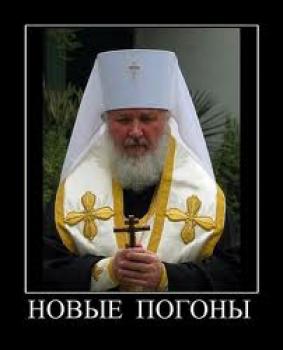 (…) And such a change of name has its support in Scripture. The same Apocalypse says: “…and they have no rest day or night, who worship the beast and his image, and whoever receives the mark of his name” (Rev. 14:11). Could it really be that all these “Potemkins” and “Abbats” never recalled, never heard in their hearts these Johanine words?” (“Spoken in the Darkness,” Russkaya Mysl, April 24, 1992, pp. 6-7).
The Parliamentary Commission found that the former representative of the Patriarchate in the USA, Archbishop Kliment (now of Kaluga) — is agent “Topaz”. Metropolitan Methodius of Voronezh until recently hid behind the nickname “Pavel”. Metropolitan Filaret of Minsk — “Ostrovsky”. The late Metropolitan Nikodim Rotov — “Svyatoslav”, and Patriarch Alexy II — “Drozdov”.
This exposure, however, does not hinder them in the least from continuing their usual activities — performing divine services, hearing confessions of the faithful, receiving ambassadors and other prominent foreign dignitaries, convening councils and synods, carrying out various charitable acts.
In his discourse on why one should not lie, Abba Dorotheus wrote:
“…No malice, no heresy, nor even the devil himself can deceive anyone except under the guise of virtue. The Apostle says that the devil himself transforms into an angel of light, therefore it is no wonder that his servants also transform themselves into servants of righteousness (2 Cor. 11:14-15).”
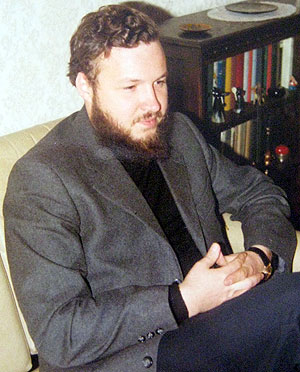
Young agent Vladimir Gundyaev-“Mikhailov” during his service in Switzerland
At a meeting of students at Moscow State University, the head of the Department of External Church Relations of the Moscow Patriarchate, Metropolitan Kirill Gundyaev of Smolensk and Kaliningrad (aka agent “Mikhailov” — the current Patriarch of the ROC MP) stated that the fact of clergy meeting with KGB representatives is “morally indifferent” (Bulletin “Direct Path,” No. 1-2, 1992). One cannot possibly agree with this statement. In no way can the interference of any state leadership in the life of the Church be considered normal and harmless, especially when that leadership is anti-God. There cannot be two opinions on this matter. The amorality of such a situation is obvious.
… Many believed and asserted that Patriarch Alexy II was elected by the free expression of will of the hierarchs of the Moscow Patriarchate. However, according to newly disclosed documents, during the preparation of the 1990 Local Council, KGB chief and future putschist Kryuchkov sent a special encrypted telegram to all KGB directorates, instructing them to promote the election of Metropolitan Alexy (Ridiger) of Leningrad to the patriarchal throne.
Would the church agents gathered at the council dare to disobey their boss? Over all these years, not a single “Drozdov,” “Abbat,” “Ostrovsky,” or others yet unmasked — not one of these “agents in cassocks” has offered an example of repentance! Not a single one!
Here is a brief list of the servants of the devil-antichrist in Orthodoxy:
Patriarch of Moscow and All Rus’ Alexy II
aka Metropolitan of Leningrad and Novgorod, Chancellor of the Moscow Patriarchate, Metropolitan of Tallinn and Estonia — KGB agent “Drozdov”
-
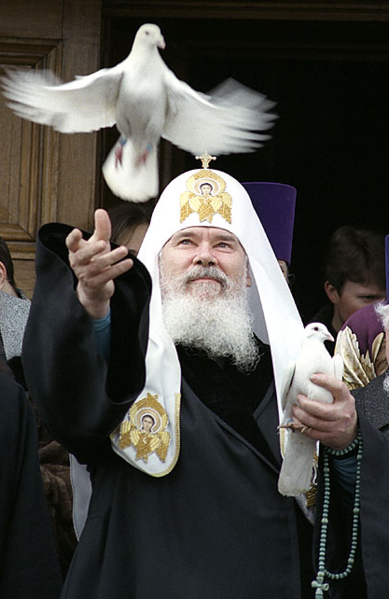
Playing with doves as a blasphemy against the Holy Spirit of the ROC Patriarch Alexy II — KGB agent Drozdov
-
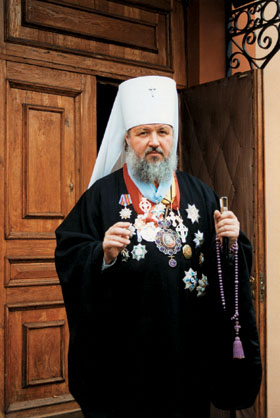
Patriarch Kirill, Vladimir Gundyaev, KGB agent Mikhailov
Patriarch of Moscow and All Rus’, Chairman of the Department for External Church Relations of the Moscow Patriarchate, former Metropolitan of Smolensk and Kaliningrad Kirill Gundyaev — KGB agent “Mikhailov” […]At a meeting of students at Moscow State University, the head of the Department of External Church Relations of the Moscow Patriarchate, Metropolitan of Smolensk and Kaliningrad Kirill (aka agent “Mikhailov”) stated that the fact of clergy meeting with KGB representatives is “morally indifferent” (Bulletin “Direct Path,” No. 1-2, 1992).[…]
Vladimir Mikhailovich Gundyaev was born on November 20, 1946, in Leningrad, into the family of a priest and a school teacher of German. After graduating from secondary school in 1965, he entered the Leningrad Theological Seminary and then the Leningrad Theological Academy, which he completed in 1970. On September 12, 1971, the 24-year-old young man was elevated to the rank of archimandrite and sent to Geneva as the representative of the Moscow Patriarchate at the World Council of Churches. He served in this position in Geneva until December 1974.
From December 1975, V.M. Gundyaev was a member of the Central Committee and Executive Committee of the World Council of Churches, since 1975 member of the “Faith and Order” Commission of the World Council of Churches, from 3 March 1976 member of the Synodal Commission on Christian Unity and Interchurch Relations. From November 1976 to October 1978, V.M. Gundyaev served as Deputy Patriarchal Exarch for Western Europe. In 1978 he was appointed Deputy Chairman of the Department for External Church Relations, a post he held until the end of 1983.
On 13 November 1989, V.M. Gundyaev was appointed Chairman of the Department for External Church Relations of the Moscow Patriarchate. He served in this position until his election as Patriarch on 27 January 2009. From the reports of the 4th Department of the 5th Directorate of the KGB of the USSR:
1972, February
Agents “Svyatoslav” and “Mikhailov” traveled to New Zealand and Australia for meetings of the Central Committee of the World Council of Churches. 1973, January
Agents of the KGB organs “Magistr” and “Mikhailov” were dispatched to Thailand and India to participate in the work of the WCC. These agents exercised beneficial influence on the work of the Council and provided materials of operational interest concerning the situation in the WCC and characterizing data on individual figures.
Agent “Kuznetsov” was dispatched to Prague to participate in the work of the Christian Peace Conference, from whom information of operational interest was obtained.
1973, February
The General Secretary of the WCC, Philip Potter, visited the USSR as a guest of the Moscow Patriarchate; through agents “Svyatoslav,” “Adamant,” “Mikhailov,” and “Ostrovsky,” beneficial influence was exerted upon him, and information of operational interest was obtained. 1983, February
Agents “Mikhailov” and “Konstantin” were sent to Switzerland to participate in events preparing the WCC assembly.
-
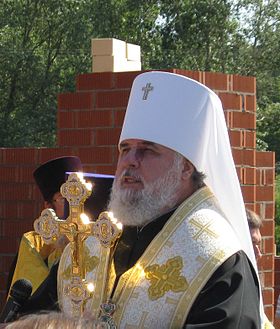
Metropolitan Mefodiy, KGB agent Pavel
Metropolitan of Perm, former Metropolitan of Astana and Almaty, former Metropolitan of Voronezh Mefodiy, — KGB agent “Pavel” — Gleb Yakunin: Metropolitan of Voronezh Mefodiy until recently hid behind the codename ‘Pavel’.
-
Metropolitan Philaret (Denisenko) of Kiev, KGB agent Antonov — repented of connections with the KGB
From the report of Deputy Head of the 4th Department of the 5th Directorate of the KGB, Colonel N. N. Romanov, on the work in 1982:The most significant results are as follows:
Through the leading agents of the Russian Orthodox Church, the Georgian and Armenian Churches are firmly maintained in positions of loyalty, active support for the peace-loving policy of the Soviet state.
In accordance with the plan of active measures against the deployment of medium-range missiles in Europe, developed in execution of the resolutions of the Central Committee of the CPSU on this issue and approved by the leadership of the KGB of the USSR on 28.08.1981, as well as within the framework of a joint plan with Service “A” of the First Chief Directorate of the KGB of the USSR to exert influence beneficial to the Soviet Union on clerical circles of the West, through the leading KGB agents “Abbot,” «Antonov», “Kuznetsov,” “Nesterovich,” and others, a complex of actions was carried out through religious channels to influence the socio-political circles of Western European countries. Through agent capabilities in the Russian Orthodox Church and friends, information was also conveyed to the Pope that “excessive” preoccupation with the Uniate question could only damage relations between the Vatican and the Russian Orthodox Church.
During 1982, 1809 meetings were held, 704 reports received. *1983, September–OctoberIn Moscow, from September 28 to October 3 of this year, a meeting of church press representatives was held at the Publishing Department of the Moscow Patriarchate, attended by 12 foreigners. Issues of information exchange were discussed. Through agents “Abbot” and “Grigory,” politically beneficial influence was exerted on the foreigners.
A meeting of the CPC working committee on disarmament issues was held in Moscow. In order to exert a positive influence, secure decisions beneficial to us, and study individual delegates, 9 KGB agents were dispatched to participate, including «Antonov», “Ostrovsky,” “Kuznetsov,” and “Vadim.” The meeting was successful, the final documents meet the interests of our state. -
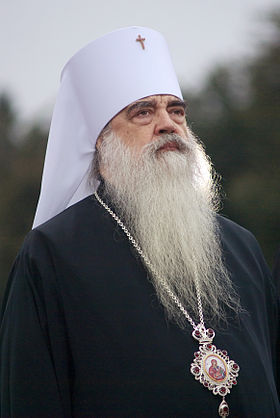
Metropolitan Filaret of Minsk, KGB agent Ostrovsky
Metropolitan of Minsk, Exarch of All Belarus Filaret, former Chairman of the Department for External Church Relations of the Moscow Patriarchate Kirill Vakhromeyev – KGB agent “Ostrovsky” — 1973, February
The General Secretary of the WCC, Philip Potter, visited the USSR as a guest of the Moscow Patriarchate; through agents “Svyatoslav,” “Adamant,” “Mikhailov,” and “Ostrovsky” beneficial influence was exerted upon him, and information of operational interest was obtained.
1983, April
Through agents «Ostrovsky» and “Kuznetsov,” an open letter from Patriarch Pimen to US President Reagan was prepared. The letter was published in the New York Times, reprinted in Izvestia on April 11, 1983, and sent to friends for publication in their newspapers.
1983, May
-
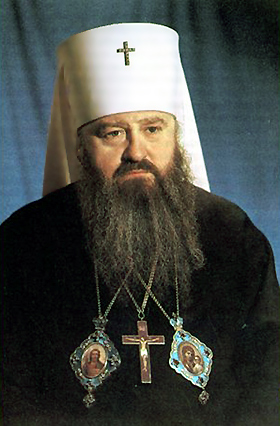
Chairman of the DECR MP and secret Catholic Metropolitan Nikodim (Rotov) — KGB agent Svyatoslav
Metropolitan of Leningrad and Ladoga (Novgorod) Nikodim (Boris Rotov) (1963-78), Patriarchal Exarch of Western Europe (1974-78), Chairman of the Department for External Church Relations of the Moscow Patriarchate (1960-1972), Metropolitan of Minsk and Belarus (1963), Head of the Publishing Department of the Moscow Patriarchate (1960-63), Archbishop of Yaroslavl and Rostov (1960-63) – KGB agent “Svyatoslav” — secret Catholic Metropolitan Nikodim (Rotov) — KGB agent Svyatoslav — mentor and patron of Kirill (Gundyaev). Thanks to the patronage of Metropolitan N. Rotov, the young priest K. Gundyaev built his career in the MP — From the reports of the 4th Department of the 5th Directorate of the KGB of the USSR:
February 1972
Agents “Svyatoslav” and “Mikhailov” traveled to New Zealand and Australia for meetings of the Central Committee of the World Council of Churches.
February 1973
The general secretary of the WCC, Philip Potter, was a guest of the Moscow Patriarchate in the USSR. Through agents “Svyatoslav”, “Adamant”, “Mikhailov” and “Ostrovsky”, a beneficial influence was exerted on him. Information of operational interest was obtained. August 1969:
Agents ALTAR, SVYATOSLAV, ADAMANT, MAGISTER, ROSHCHIN and ZEMNOGORSKY went to England to take part in the work of the WCC central committee. Agents managed to avert hostile activities [public criticism of Soviet religious persecution]…10
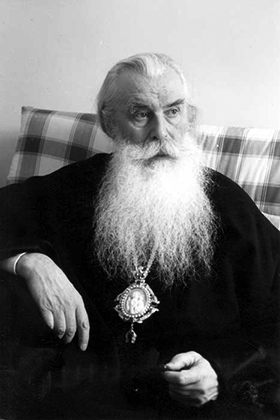
Metropolitan Pitirim — Konstantin Nechaev — KGB agent Abbot
Metropolitan Pitirim of Volokolamsk and Yuriev (1963-2003) (Konstantin Nechaev), head of the Publishing Department of the Moscow Patriarchate (1963-64) — KGB agent “Abbot” — one of the most valuable agents in the KGB
In the NRB, a delegation of the ROC headed by Patriarch Pimen traveled to the jubilee celebrations marking the 30th anniversary of the patriarchate of the Orthodox Church of Bulgaria. The delegation included KGB agents “Ostrovsky”, “Nikolsky”, “Ognev”, “Sergeev” and an operative of the active reserve under appropriate cover as an employee of the Patriarchate.
Agents “Abbot”, “I. Sergeeva”, and “T.V.” traveled to Ireland.
July 1983
To Vancouver (Canada) for the 6th General Assembly of the WCC, 47 KGB agents from among religious authorities, clergy, and technical staff were sent as part of the Soviet religious delegation.
September–October 1983
A meeting of representatives of the church press took place in Moscow from September 28 to October 3 of this year at the Publishing Department of the MP, with 12 foreigners participating. Issues of information exchange were discussed. Through agents “Abbot” and “Grigory”, a politically advantageous influence was exerted on the foreigners.
A meeting of the CPC working committee on disarmament took place in Moscow. In order to exert a positive influence, to achieve decisions favorable to us, and to study individual delegates, 9 KGB agents were assigned to take part in the committee’s work, including “Antonov”, “Ostrovsky”, “Kuznetsov”, and “Vadim”. The meeting proceeded successfully, and the final documents meet the interests of our state.
1980, January
Agent “Abbot” traveled to Sweden through the Union of Soviet Societies for Friendship with a counter-propaganda assignment.
March 1980
Agents “Abbot” and “Markov” were sent to a meeting of the WACC (international organization of church journalists). The information obtained from them about the situation in the WACC and about Hesler, an object of our operational interest, is of value to the KGB.
Agent “Abbot” traveled to England for the enthronement of the head of the Anglican Church.
June 1980
Agent “Abbot” was routed to France. Agent “Abbot” also traveled to the USA through the Soviet Peace Committee.
November 1980
Agent “Abbot” was sent to the assembly of the Ecumenical Centre for Information in Europe in the FRG.
December 1980
Agents “Abbot” and “Remark” returned from a trip to the FRG. Through the agents, a positive influence was exerted on believers, exposing slanderous fabrications about the situation of believers in the USSR.
From the report of the deputy head of the 4th Department of the 5th Directorate of the KGB, Colonel N. N. Romanov, on work in 1982:
- The most significant results are as follows:
Through the leading agent network of the ROC, the Georgian and Armenian Churches are firmly maintained in positions of loyalty and active support for the peace-loving policy of the Soviet state.
In accordance with the plan of active measures against the deployment of intermediate-range missiles in Europe, developed in execution of the CPSU Central Committee resolutions on this issue and approved by the leadership of the KGB USSR on 28.08.1981, as well as within the framework of a joint plan with the “A” service of the First Chief Directorate of the KGB USSR to exert influence beneficial to the Soviet Union on the clerical circles of the West through the leading KGB agent network “Abbot,” “Antonov,” “Kuznetsov,” “Nesterovich,” and others, a series of actions was carried out through religious channels to influence the socio-political circles of Western European countries. Through agent capabilities in the ROC and friends reaching the Pope, information was also conveyed that an “excessive” preoccupation with the Uniate issue could only damage relations between the Vatican and the ROC.
During 1982, 1809 meetings were held and 704 reports were received.*
May 1983
A delegation of the ROC headed by Patriarch Pimen traveled to the People’s Republic of Bulgaria for the jubilee celebrations marking the 30th anniversary of the patriarchate of the Bulgarian Orthodox Church. The delegation included KGB agents “Ostrovsky,” “Nikolsky,” “Ognev,” “Sergeev,” and an operational officer from the active reserve under the corresponding cover of a patriarchate staff member.
Agents “Abbot,” “I. Sergeeva,” and “T.V.” traveled to Ireland.
July 1983
To Vancouver (Canada) for the 6th General Assembly of the WCC, 47 KGB agents were dispatched as part of the USSR religious delegation, drawn from among religious authorities, clergy, and technical personnel.
October 1983
At the invitation of the Denmark–USSR Friendship Society, a ROC delegation traveled to Denmark, which included agents “Abbot” and “Grigory.” They were given the agent assignment to uphold the peace-loving policy of the Soviet state and to expose the insinuations of Western propaganda regarding the situation of religions and believers in the USSR.
A ROC delegation traveled to Czechoslovakia to celebrate the 25th anniversary of the CPC, which included KGB agents “Antonov,” “Vadim,” and “Kuznetsov.” With their active participation, a declaration was worked out on the occasion of the 25th anniversary of the CPC, reflecting on the whole the interests of our state.
From 3 to 8 October of the current year a meeting of members of the Ecumenical Information Circle in Europe (an organization uniting Christian publicists) was held in Moscow, with the participation of 23 foreigners. Through agents “Abbot” and “Grigory,” a politically beneficial influence was exerted on the foreigners.
September – October 1983
In Moscow, from 28 September to 3 October of the current year, a meeting of representatives of the church press was held at the Publishing Department of the MP, with 12 foreigners participating. Issues of information exchange were discussed. Through agents “Abbot” and “Grigory,” a politically beneficial influence was exerted on the foreigners.
A meeting of the CPC Working Committee on Disarmament Issues took place in Moscow. In order to exert a positive influence, secure decisions beneficial to us, and study individual delegates, 9 KGB agents were sent to participate in the work of the meeting, including “Antonov,” “Ostrovsky,” “Kuznetsov,” and “Vadim.” The meeting proceeded successfully, with the final documents serving the interests of our
-
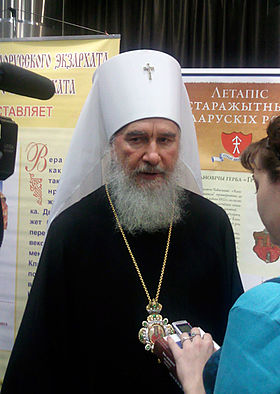
Metropolitan Klement — German Kapalin — KGB agent Topaz
Metropolitan of Kaluga and Borovsk (2004–…, archbishop 1990–2004), Head of the Publishing Council of the Moscow Patriarchate (2009–…), Chancellor of the Moscow Patriarchate (2003–09), Administrator of the Patriarchal Parishes in the USA (1987–90), Administrator of the Patriarchal Parishes in Canada (1982–87) — German Kapalin — KGB agent “Topaz” — […] The Parliamentary Commission found that the former representative of the Patriarchate in the USA, Archbishop Klement (now of Kaluga), is agent “Topaz”.
The Fifth Sergian Patriarch. Photo archive
***
“Abbot” Makes Contact (conversation with G. Yakunin)
Vasilyev P. // Arguments and Facts, Moscow, No. 1 (586), January 1992. P.5.
At present, a deputy commission of the Supreme Soviet of the Russian Federation is working with the KGB archives. Our correspondent P. VASILYEV met with a member of this commission, priest G. YAKUNIN.
P. VASILYEV: What do the documents you are working with look like?
G. YAKUNIN: They are sealed, light-green volumes marked “Secret” and “Top Secret.” They contain monthly reports on the results of the agent-operative activity of the departments of the Fifth Directorate (later Directorate “Z”), submitted to the KGB leadership. As a clergyman, I have been tasked with studying the activities of the 4th, so‑called church, department of that directorate. Since the KGB leadership recently abolished it as having engaged in unconstitutional activity—control over the spiritual life of society—I think I have the right to acquaint your readers with the contents of the secret documents prepared within the church department.
- 1967 “At the meetings of the Executive Committee and the Central Committee of the World Council of Churches in September of this year on the island of Crete, agents ‘Svyatoslav’, ‘Voronov’, ‘Antonov’ and others spoke out condemning the aggressive actions of the United States in Vietnam and of Israel in the Middle East. The delegation of the Russian Orthodox Church voted against the resolutions on Vietnam and the Middle East proposed by representatives of Western churches, and demanded a discussion on the situation of Negroes in the USA.”
- August 1969 “Our agent network succeeded in placing agent ‘Kuznetsov’ in a leading position in the World Council of Churches.”
- 1980 “Active Baptist schismatic Khaylo was sentenced under Article 190, paragraph 1 of the RSFSR Criminal Code and sent to a psychiatric hospital for compulsory treatment. Agent ‘Pavel’ has been advanced to a leadership position in the Russian Orthodox Church and sent to Irkutsk.”
- 1982 “Currently in the country… 229 churchmen and sectarians are serving sentences (in 1981 there were 220). In addition, 18 persons are in exile (in 1981 — 24). The KGB organs maintained over 2,500 operational files on hostile elements from this category of citizens (in 1981 — 2,225).
- The most significant results are as follows: through leading agents, the Russian Orthodox, Georgian and Armenian Churches are firmly kept in a position of loyalty…
- In 1982, 1,809 meetings were held, 704 reports received. For work with agents, 13 safe houses and 2 conspiratorial apartments are used. Deputy Chief of the 4th Department, Colonel Romanov.”
- 1983 “In Moscow, from September 28 to October 3 of this year, a meeting of representatives of the church press was held at the Publishing Department of the Moscow Patriarchate, with 12 foreigners participating…
- Through agents ‘Abbot’ and ‘Grigory’, politically advantageous influence was exerted on the foreigners. Chief of the 4th Department, Colonel Romanov.”
- 1987 “Agent ‘Potemkin’ took part in the meeting of the Central Committee of the World Council of Churches, held in the FRG. He obtained data on the situation at the headquarters of this organization, on upcoming personnel changes in the leadership of its divisions…
- To provide counterintelligence cover for the meeting of the Continuation Committee of the Christian Peace Conference and to carry out agent-operative measures jointly with friends (PRB, HPR, GDR, Cuba, CSSR), Comrades V. N. Shirokopoyas and A. M. Spiridonov were sent to the GDR. Twelve agents of the state security organs were also routed there. During the event, attempts at provocative attacks against the churches of socialist countries were neutralized, unfavorable personnel changes were prevented, and politically advantageous final documents were adopted…
- Chief of the 4th Department, Colonel Timoshevsky.”
- 1988 “For the first time, agent ‘Adamant’ from among the hierarchs of the ROC took part in the General Conference of UNESCO as a member of the Soviet delegation… Five personal and work files on territorial agents recommended for advancement into the leadership echelon of the Russian Orthodox Church were reviewed. Chief of the 4th Department, Colonel Timoshevsky.”
- 1989 “Agent ‘Vily’ has been established at the service target (the Publishing Department of the Moscow Patriarchate)…
- A new issue of the magazine ‘Slovo’, published under the control of our agent network, has been released and is being distributed in church and near‑church circles. Chief of the 4th Department, Colonel Timoshevsky.”
P. VASILYEV: Father Gleb, judging by these documents, did the activities of “agents in cassocks” amount only to eavesdropping and snooping, and to pushing through people and decisions favorable to the KGB and the CPSU Central Committee?
G. YAKUNIN: Not only that. Here are lines from the August (1988) report of Colonel Timoshevsky.
- “Within the case file of operational development (editor’s note: DOR) ‘The Pharmacist,’ measures were carried out aimed at further compromising the target in the eyes of his like-minded associates and his contacts in the West…
- Through agents and other means, the wife of ‘The Pharmacist’ was persuaded to file for divorce in court….“
- In addition, on KGB orders, agents conducted “special measures” using special preparations that “loosen the tongue.”
P. VASILIEV: Who, for instance, hides behind the code names “Abbot” and “Adamant”? And who is this “Pharmacist”?
G. YAKUNIN: “Abbot” and “Adamant” are two currently serving hierarchs of the Russian Orthodox Church.
As for “Pharmacist.” For purposes of secrecy, the KGB gave code names not only to its own agents but also to the people it was targeting—in Chekist parlance they were called “targets of operational surveillance, registration, or development.”
“The Pharmacist” is the religious dissident layman A. Ogorodnikov.
The “religious extremist” priest A. Men, for example, was code‑named “Missionary,” V. Lapkovsky—“Herod,” A. Bessmertny—“Clown,” and so on.
Incidentally, do you know what code names the writer A. Solzhenitsyn and Academician A. Sakharov had? “Spider” and “Ascetic.” Sakharov’s wife, E. Bonner, appeared in KGB operational reports as “Fox.”
P. VASILIEV: Were agents paid for their work?
G. YAKUNIN: That is not reflected in the 4th Department’s reports. But I know that it was not so much that the KGB paid agents as that the agents “gave” to the leadership of the 4th Department in return for help with their personal career advancement. At the same time, the reports mention that in 1983 one of the leaders of the Buddhist Church, agent “Sayan,” was awarded a KGB USSR certificate “for long‑term cooperation and active assistance to state security organs.”
The most active agents among the leadership of the Russian Orthodox Church were also rewarded, for example agent “Adamant.”
According to the KGB’s own assessment, the “leading agents” included “Abbot,” “Adamant,” “Antonov,” “Kuznetsov,” “Nesterovich,” “Skala,” “Altar.”
P. VASILIEV: Thank God all that is in the past.
G. YAKUNIN: Alas, it is not so. I have learned that the leadership of the Department for External Church Relations of the Moscow Patriarchate is having its arm twisted to take on one of the active‑reserve KGB officers as a staff member.
P. VASILIEV: Speaking frankly, don’t you feel sorry for these people? After all, they became victims of the system…
G. YAKUNIN: It is not they who are the victims of the system, but the honest pastors who experienced the full force of the repressive apparatus—Orthodox priests D. Dudko, G. Edelshtein and the layman V. Popkov, the Baptist preacher G. Kryuchkov, Catholic priests S. Tankevičius and A. Svarinskas, Pentecostals N. Goritoy, B. Perchatkin and hundreds of others.
But the “agents in cassocks” who diligently served the KGB must, according to ancient church custom, offer public repentance and cleanse themselves from the sin of Judas.
Without repentance and cleansing no genuine spiritual rebirth of the Church is possible.
May the Lord God help us in this!
*****
From the Mitrokhin Archives
Vasily Mitrokhin, a KGB officer who worked in Moscow, became disillusioned with communist ideology and the KGB and secretly copied documents from the Lubyanka. After the collapse of the Soviet Union he smuggled suitcases of KGB USSR documents out through the British embassy in Riga, where together with Professor Andrew Christopher he wrote several books.
From the reports of the 4th Department of the 5th Directorate of the KGB USSR:
February 1972
Agents “Svyatoslav” and “Mikhailov” traveled to New Zealand and Australia for meetings of the Central Committee of the World Council of Churches.
May 1972
A Soviet citizen from among the authorities of the Russian Orthodox Church, “Krylov,” was recruited as an agent of the KGB.
January 1973
Agents of the KGB “Magister” and “Mikhailov” were dispatched to Thailand and India to take part in the work of the WCC. These agents exerted a favorable influence on the Council’s work and provided material of operational interest about the situation in the WCC and characterizing individual figures.
Agent “Kuznetsov” was dispatched to Prague to take part in the work of the Christian Peace Conference; information of operational interest was obtained from him.
February 1973
The general secretary of the WCC, Philip Potter, was in the USSR as a guest of the Moscow Patriarchate; a favorable influence was exerted on him through agents “Svyatoslav,” “Adamant,” “Mikhailov,” and “Ostrovsky.” Information of operational interest was obtained.
May 1973
Agents were dispatched abroad on counter‑intelligence assignments: “Nesterov” and “Akademik” to England and Switzerland, “Peresvet” to France, “Moskvich” to the FRG, and “Zazyulya” to the Polish People’s Republic. The agents took part in the work of various commissions of the WCC and the Christian Peace Conference and exerted a politically favorable influence.
January 1977
Agent of the 4th Department of the 5th Directorate “Kuznetsov” traveled to Czechoslovakia. Agents “Adamant,” “Nikolsky,” and “Mikhail” were sent to India as part of a delegation led by Patriarch Pimen.
January 1980
Agent “Abbot” traveled to Sweden under the aegis of the Union of Soviet Friendship Societies on a counter‑propaganda mission.
March 1980
Agents “Abbot” and “Markov” were sent to a meeting of the WAAC (World Association for Christian Communication). The information they provided about the situation in the WAAC and concerning Hessler, a target of our operational interest, is of interest to the KGB.
Agent “Abbot” traveled to England for the enthronement of the head of the Anglican Church.
May 1980
Agents “Vadim” and “Voronov” traveled to the Hungarian People’s Republic. Agent of the Leningrad Oblast KGB Directorate “Georgiev” returned from a meeting of the Youth Commission of the WCC in Switzerland.
Agent “Remark” went on a short‑term mission to the FRG. The agent was given the task of studying processes taking place in international circles and also studying the behavior of agent of the Leningrad Oblast KGB Directorate “Markov.”
June 1980
Agent “Abbot” was routed to France. Agent “Abbot” traveled to the USA under the aegis of the Soviet Peace Committee.
September 1980
In order to expose the mystification of public opinion in the West regarding the criminal case against Yakunin, agent “Esaulenko” gave an interview to a TASS correspondent, which was disseminated abroad by the mass media.
November 1980
Agent “Abbot” was sent to the FRG for the Assembly of the Ecumenical Centre for Information in Europe.
December 1980
Agents “Abbot” and “Remarque” returned from a trip to the FRG. Through these agents, a positive influence was exerted on believers with regard to exposing slanderous fabrications about the situation of believers in the USSR.
From a report on the work in 1982 by Deputy Chief of the 4th Department of the 5th Directorate of the KGB, Colonel N. N. Romanov:
The most significant results are as follows:
Through leading agents in the Russian Orthodox Church, the Georgian and Armenian Churches are firmly held on positions of loyalty and active support for the peace-loving policy of the Soviet state.
In accordance with the plan of active measures against the deployment of medium-range missiles in Europe, developed in implementation of the Central Committee of the CPSU resolutions on this matter and approved by the leadership of the USSR KGB on 28.08.1981, as well as within the framework of the joint plan with the “A” Service of the First Chief Directorate of the USSR KGB to exert favourable influence for the Soviet Union on Western clerical circles through leading KGB agents “Abbot”, “Antonov”, “Kuznetsov”, “Nesterovich” and others, a complex of actions was carried out via religious channels to influence socio-political circles in Western European countries. Through agent capabilities within the ROC and friends, information was also conveyed to the Pope that his “excessive” preoccupation with the Uniate issue could only harm relations between the Vatican and the ROC.
During the period of 1982, 1,809 meetings were held, and 704 reports were received.
February 1983
Agents “Mikhailov” and “Konstantin” were sent to Switzerland to participate in events preparing for the WCC assembly.
April 1983
Through agents “Ostrovsky” and “Kuznetsov”, an open letter from Patriarch Pimen to US President Reagan was prepared. The letter was published in the New York Times, reprinted in Izvestia on 11.4.83, and sent to friends for publication in their newspapers.
May 1983
A delegation of the Russian Orthodox Church headed by Patriarch Pimen left for the People’s Republic of Bulgaria for the jubilee celebrations dedicated to the 30th anniversary of the patriarchate of the Bulgarian Orthodox Church. The delegation included KGB agents “Ostrovsky”, “Nikolsky”, “Ognev”, “Sergeyev” and an operational officer from the active reserve under appropriate cover as a staff member of the Patriarchate.
Agents “Abbot”, “I. Sergeyeva”, and “T.V.” travelled to Ireland.
July 1983
Forty-seven KGB agents from among religious authorities, clergy and technical staff were sent to Vancouver (Canada) for the 6th General Assembly of the WCC as part of the USSR religious delegation.
October 1983
A delegation of the Russian Orthodox Church, which included agents “Abbot” and “Grigory”, travelled to Denmark at the invitation of the Denmark–USSR Friendship Society. They were given the agent assignment to uphold the peace-loving policy of the Soviet state and to expose the inspirations of Western propaganda concerning the situation of religions and believers in the USSR.
A delegation of the Russian Orthodox Church, which included KGB agents “Antonov”, “Vadim”, and “Kuznetsov”, travelled to the CSSR to celebrate the 25th anniversary of the Christian Peace Conference. With their active participation, a declaration was worked out on the occasion of the 25th anniversary of the CPC that, on the whole, reflected the interests of our state.
From 3 to 8 October this year, a meeting of the members of the Ecumenical Circle for Information in Europe (an organisation uniting Christian publicists) took place in Moscow, with 23 foreigners taking part. Through agents “Abbot” and “Grigory”, a politically favourable influence was exerted on the foreigners.
September – October 1983
From 28 September to 3 October this year, a meeting of representatives of the church press took place at the Publishing Department of the Moscow Patriarchate in Moscow, in which 12 foreigners participated. Issues of information exchange were discussed. Through agents “Abbot” and “Grigory”, a politically favourable influence was exerted on the foreigners.
A meeting of the CPC Working Committee on Disarmament took place in Moscow. In order to exert a positive influence, to secure decisions advantageous to us, and to study individual delegates, 9 KGB agents were sent to take part in the meeting, including “Antonov”, “Ostrovsky”, “Kuznetsov” and “Vadim”. The meeting was successful, and the final documents correspond to the interests of our state.
From a report for 1989 by the Chief of the 4th Department of the 5th Directorate of the USSR KGB, Colonel V. I. Timoshevsky:
In accordance with the plan approved by the leadership of the USSR KGB, agent-operational and organisational measures were carried out to ensure state security during the preparation and holding of World Council of Churches (WCC) events in Moscow, in which more than 500 foreign religious figures participated. As a result of the measures taken, the Executive Committee and the Central Committee of the WCC adopted public statements (8) and messages (3) that corresponded to the political line of the socialist countries. Agent and operational-technical measures were carried out with regard to 29 targets of operational interest to the KGB, and 9 targets were placed under surveillance. Through agents, positive influence was exerted on foreigners, and additional identifying and characterizing data were obtained, as well as information about their political views and their standing in their own countries. Numerous interviews favourable to us were secured. To resolve organisational and operational issues, two meetings of KGB operational groups were held.
Fragments from the KGB reports are quoted from the book by G. Urushadze, Selected Passages from Correspondence with Enemies. St. Petersburg, 1995, pp. 210–220.
| 9 October 1963 – 5 September 1978 | ||
| Church: | Russian Orthodox Church | |
| Predecessor: | Pimen (Izvekov) | |
| Successor: | Antony (Melnikov) | |
| 3 September 1974 – 5 September 1978 | ||
| Church: | Russian Orthodox Church | |
| Predecessor: | Antony (Bloom) | |
| Successor: | Filaret (Vakhromeyev) | |
| 21 June 1960 – 30 May 1972 | ||
| Church: | Russian Orthodox Church | |
| Predecessor: | Nikolay (Yarushevich) | |
| Successor: | Yuvenaly (Poyarkov) | |
| 4 August – 9 October 1963 | ||
| Predecessor: | Varlaam (Borisevich) | |
| Successor: | Sergiy (Petrov) | |
| 23 November 1960 – 4 August 1963 | ||
| Predecessor: | Isaiah (Kovalyov) (acting) | |
| Successor: | Leonid (Polyakov) | |
Related articles
- From the reports of the 4th Department of the 5th Directorate of the KGB of the USSR: Soldiers of the invisible front — priests of registered churches in the service of the godless authorities. A vivid example: Patriarch V.M. Gundyaev. Their name was: “Legion” Vladimir Mikhailovich Gundyaev was born on November 20, 1946, in Leningrad, into the family of a priest and…
- Video: KGB in the church The KGB, on orders from the CPSU, destroyed the church through its 5th Directorate. Selection and training of personnel for…
- Relations between the UOC (MP) and the UOC KP are heating up again Recently, the head of the UOC KP Filaret stated that with the arrival of the new government, they are trying to…
- An SBU provocateur against Sunday Adelaja, the sidekick of the boozy, degraded Sasha Sinitsky from Zhitomir, or — the Ukrainian SBU — a “forge” of anti-Protestant cadres! But! If there is a criminal element with Sunday, then why the provocateurs?! Article from the church’s website…
- Bulgarian secret service agents in cassocks come to the aid of their colleagues in the ROC It is noteworthy that Bulgaria, a member of the EU and NATO, after carrying out lustration of its local “KGB” agents, still…
- ROC – a spy church …the top leadership of the Patriarchate were members of the CPSU, and this fact is still being kept secret to this day….
- “Abbot” gets in touch. “Arguments and Facts” 1992 Currently, a parliamentary commission of the Supreme Soviet of the Russian Federation is working with KGB archives. With a member…
- Adam — a stunning turncoat who betrayed, persecuted, and hounded the emigration (i.e., “anti-Soviet activity”) together with atheist Commies in the USSR! or: The insights of the “Bethany” church marked the beginning of a difficult but absolutely necessary process of overthrowing an extremely cunning religious impostor and America’s chief religious mafioso! The article has been updated and edited 6 times and will be updated. Preface to the article: After the publication of this…
- The ROC stood up for a Pentecostal community Archpriest Vsevolod Chaplin, head of the ROC’s synodal department for church-society relations, appealed with a request…
- The ROC, which imported cigarettes into Russia in the 1990s, reminded: the promotion of cigarettes in art is a sin The Russian Orthodox Church urged artists and advertisers to stop creating romanticized images of smokers….
- Konstantin Preobrazhensky: Chapter 1 KGB Pastor-Agents from the book “The KGB Comes with Us” It’s hard for an ordinary Christian to believe that a pastor he knows well could turn out to be a disguised…
- Interview with Gleb Yakunin about the KGB’s fight against the church An interview by Vladimir Oivin with the chairman of the Public Committee for the Defense of Freedom of Conscience, priest of the Autonomous Orthodox Church Gleb Yakunin about…