Ivan Levchuk
Ivan Levchuk stopped the Pentecostal church from accepting the alien fire of the Tallinn wind of the KGB, when Korosten’s Kaminsky accepted it, and Belykh was inclined to. He died a month after Ukraine confirmed independence. His place was taken by the Kryvyi Rih brothers Zhora Babiy and Nikolai Kotyakov — faithful servants of Viktor Belykh.
‘All his life is a struggle …’
‘I am grateful to my God that I can live in this country and suffer for the name of Jesus Christ’
I.A. Levchuk
The life of every Christian is connected with struggle. We struggle with ourselves, our habits and bad character traits, forced to stand against temptations and hostile attacks. The hardest lot falls to those on the front line of this struggle — the ministers. To be God’s minister is a great responsibility before God and people. Carrying out the work of a bishop was never easy, and especially so in the period from 1940 to 1990 in the Soviet Union. The mighty “totalitarian machine” made life unbearable for those who allowed themselves to think differently than was required in the USSR. Among the “dissidents” of that time were also Christians of the evangelical faith — Pentecostals. Being a minister of a Pentecostal congregation (especially an unregistered one) was equated with a grave criminal offense.
One of those whom the Lord placed on the front line of Pentecostal congregations in Ukraine was Bishop Ivan Antonovych Levchuk. The contribution this brother made to building up Pentecostal churches is very great. His whole life, every minute he lived, was devoted to serving the Lord. Wherever his life’s path led, everywhere he proclaimed the gospel of his Savior and encouraged Christians. For many, Ivan Antonovych became an example of sincere service to God and people, of boldness in defending the Truth, of unyielding steadfastness and courage in enduring suffering.
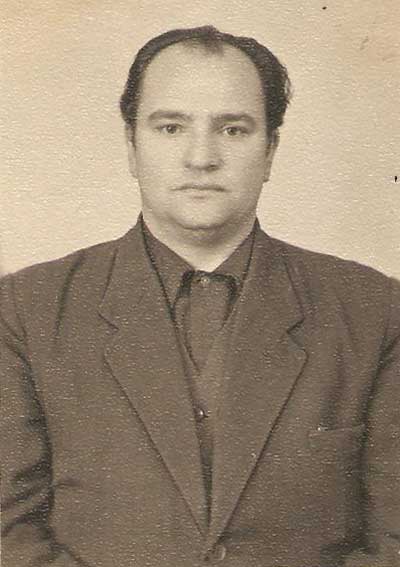
Ivan Antonovych Levchuk was born on February 28, 1922, in the village of Soshychne, Kamin-Kashyrskyi district, Volyn region. From childhood, together with his parents, he attended meetings of evangelical Christians. Believers often gathered in the Levchuk home to praise the Lord together. Little Ivan loved his Savior and sincerely served Him. His mother’s prayers and father’s admonitions were not in vain — his son followed Christ along the narrow path.
The Lord had prepared for Ivan a hard, suffering-filled, and eventful life. Perhaps that is why, when Christians were being shot for refusing to take up weapons, God preserved the young man from death. A few minutes before his execution, he was rescued by General Pukhov, who assigned him to serve as a clerk in an artillery regiment. After completing his military service, the young Christian remained to live in Korosten, Zhytomyr region, where their regiment had stopped. A year later, in the summer of 1946, Levchuk moved to Kyiv. In a vision, the Lord revealed to him the need to labor there. When Ivan arrived in Kyiv, he saw a sorrowful picture of spiritual cooling among many believers. This prompted him to begin small, secret meetings. These evening gatherings were highly successful, and the number of attendees began to grow. Here one could hear Ivan Antonovych’s living sermons, receive counsel, and pray sincerely. Already at that time, the Lord was using him to help His children. Levchuk had a prophetic gift, and the Lord also revealed to him the thoughts and deeds of others. Ivan Antonovych was known as a sincere and fervent preacher, a servant zealous for God’s work. Besides caring for his own small congregation, Levchuk also visited other communities to minister with the word and pray together. Thus began the pastoral work that the brother carried out until the end of his life.
Ivan Antonovych was never indifferent to the sufferings and hardships of his brothers and sisters in Christ. He greatly worried for Christ’s church, over which the clouds of trial hung so low. Therefore, in March 1948 he participated in the secret Dniprodzerzhynsk congress of ministers who saw a need to form a Union separate from the Baptists. At this congress Ivan Levchuk played an important role — he helped prepare it and served as one of the assistants to the presiding brother Afanasiy Bidash. During the congress, a petition letter was written to the government of the USSR asking permission for Pentecostals to have their own Union. The brothers decided to travel to Moscow. The congress ended tragically for all its participants. Early in the morning at the train station, the ministers were arrested. Ivan Levchuk, who was then 26 years old, was sentenced to ten years of imprisonment. For eight years he was far from his native church, in the cold and harsh land of Komi.
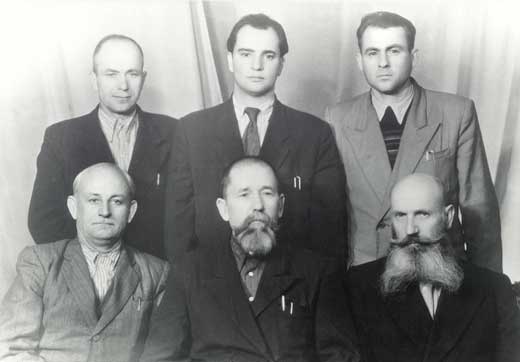
Returning from imprisonment, the minister was able to live in freedom for only half a year. In Levchuk’s heart burned a great desire to finish the work he had begun — to obtain permission from the authorities for the registration of the Union of Christians of the Evangelical Faith. In August 1956 in Kharkiv, Ivan Levchuk took part in the second congress of ministers of the CHVE. Ivan Antonovych was tasked with gathering signatures under a written application for registration. During this time, the brother was ordained to the ministry of presbyter-evangelist, and later to the ministry of bishop.
In the autumn of that same year, together with the brothers, Levchuk went to Moscow to ask for permission for registration. In response to threats, he boldly declared: “For the name of the Lord, I am ready to exchange my new suit again for an old prisoner’s camp uniform.”
The lists that the authorities cunningly obtained from the leading brothers of the unregistered union of Evangelical Christians–Baptists were used for an entirely different purpose than intended. Across the country, on the basis of those very lists sent to Moscow, trials were launched against the leaders and active members of churches throughout the USSR. Ivan Antonovych felt this brutal crackdown himself. In January 1957, in the town of Pyatykhatky in the Dnipropetrovsk region, during a meeting of the brothers’ council, KGB agents “registered” the ministers and sternly warned them of a possible arrest. Soon the authorities made good on their warning. After a “detailed” investigation and a trial, Ivan Levchuk was sentenced to five years of imprisonment. Those years the minister was forced to live in distant Mordovian camps. Between his second and third arrests, Ivan Antonovych was able to live in freedom for only a year and a half. In 1964 he was sentenced for the third time to 5 years, which he served in the Sokal strict-regime colony. In order to sentence him for the fourth time, after a brief respite from prison (only 8 months), Levchuk was accused of agitating for disobedience to the authorities, renunciation of USSR citizenship, passports, and trade unions. And again — five years of suffering in Siberia. This time the authorities simply exiled him to the town of Zima in the Irkutsk region to work at a chemical plant.
For only slightly less than three of the twenty-six years (from 1948 to 1974) he lived in freedom. Yet during that time, Ivan Levchuk managed to accomplish more than some people do in an entire lifetime. Through this minister, in one of the camps of the cold Komi region, a hardened, long-term criminal — called a “pakhan” in the colony — came to God. He noticed that Levchuk would disappear from time to time, hiding from others. The “pakhan” began to follow Ivan Antonovych. The secret turned out to be simple — the brother went away to pray. The criminal had no choice but to bow in prayer himself. After several such meetings, he sincerely repented before God.
Living far from home, the brother never abandoned God’s work. Faithful to his calling, he carried out pastoral labor in distant Vorkuta, helping the suffering and exhausted both in Mordovia and in faraway Siberia. Whenever possible, he secretly sought fellowship with God’s people, hiding it from the authorities. Through contact with Ivan Antonovych, people were converted and began to sincerely serve God. As a minister, Levchuk performed water baptisms in an ice-hole in the bitter winter. Once, after such a baptism, the Lord healed Levchuk of an illness. Far from his home church, the brother more than once had to pray for the sick and see healings, and secretly conduct the Lord’s Supper. In the Irkutsk region, during his final exile, he organized a church and constantly cared for it. Even many years later, Christians remembered Ivan Antonovych Levchuk with warm words.
Life in distant Mordovia, behind high walls crowned with barbed wire in the colony at Sokal, and in exile in Zima was unbearable. Being behind bars meant working to exhaustion, enduring beatings and abuse, constantly suffering hunger and mockery from the authorities. It meant only one thing — to fight, to fight unyieldingly, and to suffer for Jesus Christ. But in this struggle, God’s servant was not left alone; his Lord was always with him. God’s mighty hand protected Ivan Antonovych in faraway, cold Vorkuta; only Christ could sustain him when his food was frozen turnip and he could not feel his hands from the cold. Who but the Savior Jesus could understand that he had no strength to go on? In such circumstances, he had to do more than simply pray — he had to cry out for help. The Lord answered, without changing life’s circumstances, helping him to endure suffering and strengthening him in faith. Only firm and unwavering faith could hold him in this struggle. Despite the dark clouds in life, Levchuk waited and prayed for freedom. Therefore, probably risking his life, he worked on preparing congresses, attended many ministers’ meetings, visited Christians, and went to Moscow together with others. One of his greatest desires was to have his own union of Pentecostals, to have the freedom to believe and to pray in a biblical way. Passing through camps and exile, he knew — God would grant freedom, and that freedom he, Ivan, would see with his own eyes. But so much struggle still lay ahead…
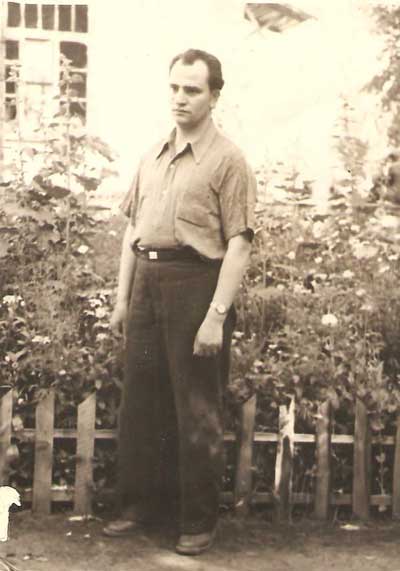
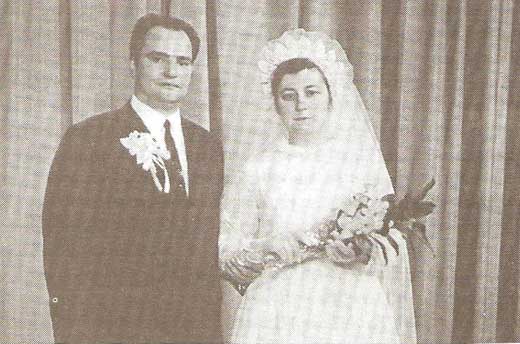
After returning from his last exile, Ivan Antonovych together with his family went back to Kyiv. The parents of Levchuk’s wife lived there. Several families, including the minister’s young family, lived together in a small living space. Only later did the Lord take care of His servant — the old dwelling collapsed, so the authorities provided them with a new apartment for their use. One proof of his faithfulness to the Lord and to the ministry is the fact that Ivan Antonovych’s personal life was settled relatively late (in 1969, at the age of 47, he married Vira Mayevska). In my opinion, the minister preferred to suffer for the faith alone, without exposing a family to worries and anxieties. Only during the final exile from 1969 to 1974 did a young wife become Levchuk’s support and comfort.
Beginning in 1974 (at the age of 52), the prison period for Ivan Antonovych came to an end. But the persecution did not end there. They still would not allow him to live freely and peacefully. For the Soviet authorities, he was one of the most hardened repeat offenders in the country, an obstinate “sectarian” with whom no agreement could be reached. The relevant agencies watched him day and night. Militia and state security officers visited the bishop more than once to talk with him, offering a three-room apartment, a highly paid job (Ivan Levchuk had worked all his life as a stoker and loader) — if only he would give up his Christian activity. Any compromising information was gathered very diligently and thoroughly. Almost until his death, KGB officers constantly exerted pressure on him. Yet the authorities were never able to break the bishop’s steadfastness in faithfully serving the Lord. Despite the surveillance, constantly hiding and evading scrutiny, he managed to travel all over the Soviet Union. By car, by suburban train, by bus, and even on freight trains, riding on top of frozen firewood, Levchuk went wherever Christians were eagerly waiting for him. Always smiling, proactive, full of determination, and cheerful — Ivan Antonovych became for me one of those I can look up to in my Christian life.
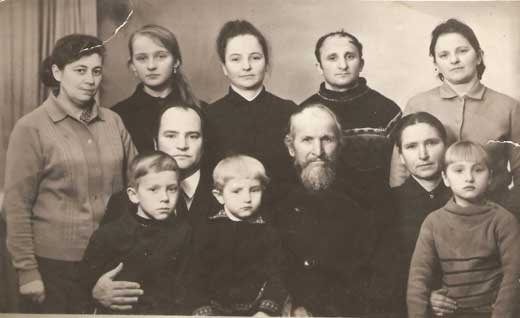
In the last years of his life, Ivan Antonovych was constantly ill. The abuse in the camps, prisons, and exile did not pass without a trace. In the first minutes of January 6, 1992, the Lord called His faithful servant, Ivan Antonovych Levchuk, to the heavenly mansions. On January 6–7, ministers from all over the former USSR came to Kyiv — those who had labored together with Levchuk, those whom he had helped with his counsel and prayer, those who loved and remembered him. At the Bortnychi cemetery near Kyiv, the body of Ivan Levchuk was laid to rest.
More than fifteen years have already passed since the Lord called His faithful worker into eternity, but the memory of this tireless servant of God remains in the hearts of many brothers and sisters. As I spoke with them, I saw how their eyes light up when they remember Ivan Antonovych, how they recall every detail of their meetings with him. Of course, it is impossible to gather all the testimonies to describe the life and ministry of Bishop Levchuk. But it is recorded far more accurately in the One who sees and remembers everything. Ivan Antonovych could say about himself, as the Apostle Paul did: “I have fought the good fight, I have finished the race, I have kept the faith” (2 Tim. 4:7).
Prepared by
Tetyana ZAIDEL,
Lutsk,
“Blahovisnyk,” 2, 2009
Similar articles
- Sumy Mayor Advises Ukrainians to Emigrate Sumy Mayor Hennadiy Minayev advised young people to emigrate from Ukraine. He said this in…
- Smila Authorities Dispersed Baptist Festival The festival “God Is Always Near” in the city of Smila, Cherkasy Oblast, had been planned for several months. The ideologist and…
- T.V. Hrushova The Ukrainian Pentecostal Movement during World War II Pentecostalism appeared in Ukraine in the 1920s. This religious movement since its emergence…
- “The Unpleasant Smell of Dictatorship Penetrates All Spheres of Life,” — Bishop of the UCEC If Vasiliy Boechko has already sounded the alarm about the situation in Ukraine, then this must be…
- Ivan Petrovich Fedotov: Times of Freedom Dear freedom. Soon after this, our longtime “friend,” the communist deputy political officer for religious affairs, came to us…
- Ivan Fedotov. Sermons — 1 On True Piety. From a sermon at a worship service in the ECB church in Maloyaroslavets. Let us read two…
- Ivan Petrovich Fedotov: The Unjust Court The first conviction. One Sunday, the church gathered in the forest at Bitsa station, in a suburb of…
- Ivan Petrovich Fedotov: Before Meeting Christ FROM THE AUTHOR. I am grateful to God that today I have the boldness, looking back at the path I have traveled…
- Ivan Petrovich Fedotov: Continuation of Life Life goes on. From the Dresden detention center, after the trial, I was taken to Matrosskaya Tishina prison and placed…
- Ivan Petrovich Fedotov: Subsequent Convictions The second conviction. But every victory comes with a price. And just a week later, on August 11, I was…
- Ivan Fedotov. Sermons — 2 “And yourselves, as living stones…” Glory to God! We were thinking about which words of Scripture to take as the motto of our…
- T.V. Hrushova Measures of Struggle Against Protestant Denominations in the 1970s in the Ukrainian SSR and Believers’ Reaction to Them The political situation in the USSR in the 1970s definitively demonstrated the utopian nature of the idea of building an atheistic society. Despite…