Freedom of conscience and persecution of Christians in Kirovsk, Murmansk region
An article exploring the history of Evangelical Christians in the Murmansk region: “Christians, especially active ones, do not just happen to evoke the strongest hatred of totalitarian regimes; they know that a free conscience does not allow a person to become a slave.” Religion was declared the “opium of the people,” and “militant atheists” began a zealous struggle against Christianity through atheist propaganda and mass repression.
The First Toilers of the Khibiny.
The dark pages of the history of the development of the Kola North, and of the Khibiny in particular, unfortunately arouse no interest among many residents of Kirovsk and Apatity. Some do not even suspect how many human lives the Soviet government sacrificed on the mining operations, on the construction of the processing industry, and on the infrastructure that we use today. How many hardships, hunger, cold, disease, and backbreaking labor the first toilers of the Khibiny had to endure—most of whom were special settlers, that is, dekulakized peasants who were exiled to the Khibiny together with their families. The first settlers lived in inhuman conditions in tents amid the harsh northern climate.
Communist Ideology.
The Soviet regime sought not only to enslave people physically. It desired much more—to destroy personal freedom, all intellectual freedom, to control conscience, and to create a standardized stereotype of thinking in the minds of citizens. At that time, only one thing was encouraged: spreading, propagandizing, and glorifying the ideas of the Communist Party headed by its leaders. Any attempt at dissent in any sphere of life—politics, culture, art, and religion—was suppressed in the most brutal manner. Such control over consciousness led to the fact that many people truly believed they were living in the most free and prosperous country, sincerely believed that the Soviet regime was fighting real “enemies of the people” and “wreckers.” Everyone knows the words of the song from the Communist era: “I know of no other such country where a person breathes so freely.”
Persecution of Christians in the Soviet Union.
Pyotr Tsyukalo once remarked: “Christians, especially active ones, do not just happen to evoke the strongest hatred of totalitarian regimes; they know that a free conscience does not allow a person to become a slave.” Religion was declared the “opium of the people,” and “militant atheists” began a zealous struggle against Christianity through atheist propaganda and mass repression.
After the October Revolution of 1917, terrible persecution of the Orthodox Church began: mass shootings of priests, seizure of church property, destruction of churches, devastation of monasteries. In many respects, this was because the church was part of the tsarist state against which the Bolsheviks were fighting.
Protestant churches could still enjoy relative freedom. But in 1929, any form of religious “propaganda” and public activity of the church, apart from conducting rites in church buildings, was banned. Over the course of ten years, there was severe persecution of all Christians in the Soviet Union. Prisons were overcrowded with evangelists of all Christian confessions. And these persecutions, with varying intensity, continued throughout the entire subsequent history of the USSR. The struggle against religion, which began after the 1917 coup, did not cease until the time of perestroika.
The aim of the repression and the bans on religious “propaganda” was to prevent the spread of the Christian faith and any other religion. The Bolsheviks were creating an atheistic society with a communist ideology and hatred for “class enemies.” And many of the ideals of Christianity were absolutely alien to the communists. Wishing to prevent their dissemination in the public consciousness, the Bolsheviks banned any preaching of the Christian faith.
Orthodox priests were allowed, under strict state control, to conduct services in the small number of remaining church buildings. But they were not permitted to engage in the spiritual education of the flock. Active Orthodox clergy who refused to submit to this ban were subjected to repression.
A similar situation existed in Protestant churches. In any evangelical church, the sermon occupies the central place in worship. And to ban the sermon meant to ban the worship services themselves. Believers were forced to go underground and gather in secret. The authorities repressed ministers and all active Christians. In later periods of history, those who attended meetings were fined, especially those in whose homes the meetings were held.
The last “prisoners of conscience”—that is, persecuted Christians of all confessions—were released from places of confinement only in the second half of the 1980s.
Lessons of History.
Very often this period of our history is consigned to oblivion. But if we do not know history, we cannot avoid the mistakes of the past. And one of those mistakes was the persecution of Christians. Unfortunately, in society there is a prevailing opinion that Protestant and evangelical churches, which are called “sects,” appeared in our country after perestroika and are alien foreign organizations. In the material that follows, I would like to tell the story of the Church of Evangelical Christians-Baptists and the Church of Christians of the Evangelical Faith (Pentecostals) in Kirovsk, which were likewise touched by the persecution and repression that occurred in the Soviet Union.
The First Evangelical Community in the Khibiny.
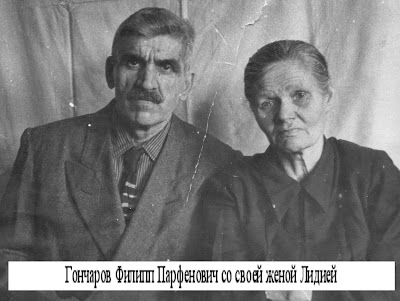
The fate of many who were dekulakized and exiled to the Khibiny was shared by peasants who had come to faith in Jesus Christ, some of whom were Baptists. Unfortunately, it is not possible to establish the names of all the dekulakized Baptist peasants. The names of only a few of those exiled in 1930 to the Khibiny are known: Stepan Ivanovich Ivanov and Praskovya Semyonovna Ivanova from the Kalinin (now Tver) Oblast, and Ilya Timofeevich Terekhov, Filipp Parfenovich Goncharov, and Lidiya Goncharova (patronymic unknown) from the Pskov Oblast.
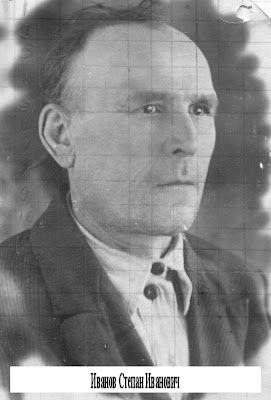
Christians have always sought fellowship in order to read the Bible together, to pray, and to support one another in the faith. Gathering at that time was forbidden. But even in the most difficult times, believers looked for opportunities to secretly visit one another. Thus, the evangelical Christian community in the city of Kirovsk traces its history almost from the very founding of the city.
The Post-War Years.
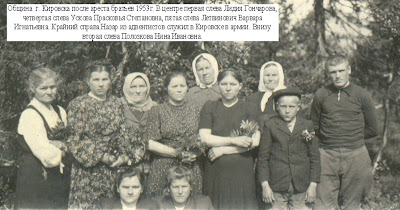
During the war, Uskova Praskovya Stepanovna turned to God. She worked as a dental technician in a polyclinic. She began attending meetings and subsequently received water baptism.
In 1945, a group of young people was brought to Kirovsk from Germany for work. These were people who had been taken into slavery by the Germans during the war. Some of them were Christians—Baptists. One of the believers was Annenko Pyotr Sergeyevich, taken by the Germans in 1942 at approximately 16 years of age. Shortly before he was forcibly taken away, he had fellowship with a Christian family in Mariupol. This was the beginning of his Christian path. In Germany, Pyotr Sergeyevich met other Christians who, like him, had been brought for work. After the war ended, he ended up in the Khibiny Mountains. Together with other believers, he joined the local Christian community. Subsequently, many of those who came from Germany, including believers, left the north, but Pyotr Sergeyevich remained. He appealed to the local authorities with a request to be allowed to gather. They answered him: “If you want to pray, go south; the city was built under Soviet power, there have not been and will not be any prayer houses here.”
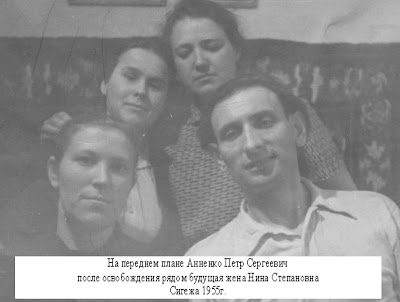
In 1948, Polozkova Nina Ivanovna came to Kirovsk from the Arkhangelsk region. She got a job in a sewing workshop. Believers gathered in the barrack where she lived. Nina Ivanovna began attending the meetings, and in 1949 she became a Christian.
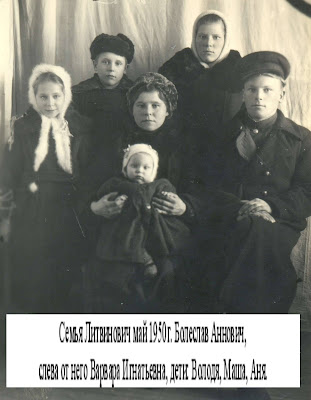
In 1949, the Litvinovich family came from Belarus for recruitment work: husband Boleslav Annovich, wife Varvara Ignatyevna, and their three children. Boleslav Annovich and Varvara Ignatyevna were believers from the Christians of Evangelical Faith (Pentecostals). They joined the Baptist community.
In October of the same year, Minzar Alexey Pavlovich (from the Pentecostals) came from the Brest region of Belarus for recruitment work.
The names of several other Christians who were in Kirovsk in those years are known: Farbakov Sergey Pavlovich, a Pentecostal; Ivanova (married name Annenko) Nina Stepanovna; Lydia Prode from Riga. By the end of the 1940s, the Christian community numbered approximately ten people. At that time, they gathered secretly in the barracks and houses where they lived. The presbyter in the community was one of the special settlers, Goncharov Philipp Parfenovich.
Repression of Protestant Christians.
The atheistic authorities could not ignore the fact that a Christian community existed in the city of communist construction. Repressive measures were undertaken to destroy it. In October 1950, four brothers were arrested. Among them were three Baptists—Goncharov Philipp Parfenovich, Afinogenov Yakov Alexandrovich, Annenko Pyotr Sergeyevich—and one from the Christians of Evangelical Faith (Pentecostals), Litvinovich Boleslav Annovich.
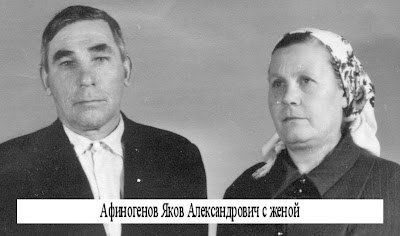
A perfectly natural question arises: what were they arrested for? In documents found in the archive of JSC (formerly the combine) “Apatit”, there are job performance references written for all four. The arrested worked in the workshops of this enterprise. In these references, written at the request of the USSR Ministry of Internal Affairs, it is stated that all of them were good, disciplined, and diligent workers. The same documents indicate the reason for their dismissal from the enterprise in October 1950—arrest. Based on the cited documents, one can say that they were respectable citizens. But their guilt was that they attended Christian meetings. They were tried in Murmansk, accused under Article 58, Part 10 of the RSFSR Criminal Code, and given 10 years each. They served their sentences in Vorkuta. But after Stalin’s death, the three Baptist brothers were released, while Litvinovich Boleslav Annovich was kept in exile in Vorkuta for another two years. During this time, his family came to him. After his release, the Litvinovich family moved to the city of Kropotkin in the Krasnodar Territory.
In the personal record card of Afinogenov Y.A., kept in the archive of JSC “Apatit,” there are two certificates. One states that he was sentenced to 10 years under Article 58, Part 10 of the RSFSR Criminal Code and that the term was reduced to 5 years. The second says that the proceedings against Afinogenov Y.A. were terminated due to lack of proof of the charges.
After the brothers’ arrest, the sisters were under heightened surveillance by the authorities and constant persecution. Bibles were confiscated. But the sisters continued to meet secretly. A great encouragement to them during that difficult time were the radio broadcasts of Yarl Nikolaevich Peisti and other preachers. The sisters would gather around the crackling radios to listen to their sermons.
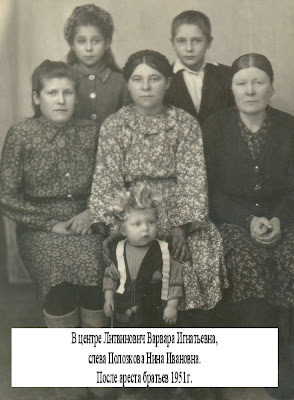
After their release, the three Baptist brothers returned to Kirovsk. About six months after his release, P.S. Annenko left for Karelia, to Segezha. Soon after, Goncharov Filipp Parfenovich and Afinogenov Yakov Aleksandrovich left the city.
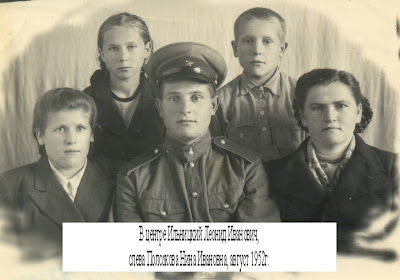
In 1952, Leonid Ivanovich Ilnitsky was drafted into the army from the Odessa region. He had been a believer since childhood and belonged to the Church of Christians of Evangelical Faith. His father had been repressed and shot. Leonid Ivanovich was brought to a military unit at the “Titan” railway station, which is about seven kilometers from Kirovsk. Out of conviction, like many other evangelical Christians, Leonid Ivanovich refused to take up arms or take the military oath. He found an evangelical community in Kirovsk, which at that time consisted only of sisters, and began secretly attending their meetings. For this, he had to walk from his unit at the “Titan” station to Kirovsk (about 7 km). He took an active part in the meetings, preaching.
During the years of Soviet power, it was very difficult to live according to one’s conscience, to think unconventionally, to stand up for faith and one’s convictions in general. It was much easier to ‘dissolve into the general mass,’ to think and act like everyone else. Therefore, not many people remained steadfast in their convictions, and for that they suffered.
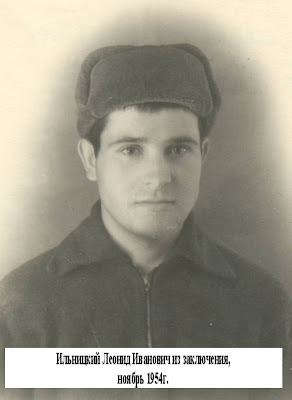 Leonid Ivanovich did not escape this fate; he was arrested, and an investigation into his case began. Nina Ivanovna Polozkova was summoned for interrogation as a witness. It was a difficult time for her; she had to avoid giving testimony against the brother that would aggravate his case. And the investigator behaved according to the usual tactics of that time—rudely and with threats.
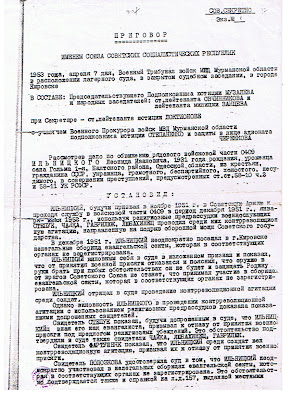
On April 7, 1953, the Military Tribunal of the troops of the MVD of the Murmansk Region, in a closed court session in the city of Kirovsk, accused Leonid Ivanovich of refusing to take the military oath, of attending illegal gatherings of an evangelical sect not registered with the appropriate authorities, and of carrying out counter-revolutionary agitation using religious prejudices. Leonid Ivanovich was sentenced under Article 58-10, part 2 of the Criminal Code of the RSFSR to imprisonment in correctional labor camps for a term of 25 years, as well as to confiscation of all property and deprivation of rights for 5 years (deprived of the right to participate in elections).
The son of Leonid Ivanovich, Ilnitsky Mikhail Leonidovich, provided a copy of this sentence.
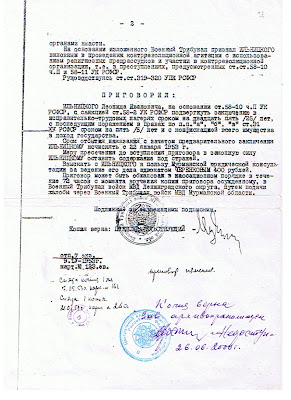
Leonid Ivanovich filed a petition for review of the sentence. While the case was under review, he was held in the Kirovsk prison. At that time, Nina Ivanovna managed to visit him once. After the sentence was reviewed, the term was reduced to five years. Unfortunately, information about where he served his sentence has not been preserved. For good behavior, Leonid Ivanovich was released early, after 2.7 years of imprisonment. After his release, he returned to Ukraine and continued his Christian ministry. Later, Leonid Ivanovich was ordained as a presbyter (elder) in the Church of Christians of Evangelical Faith (Pentecostal) in the city of Pervomaysk, Nikolaevskaya region.
In 1955, Aleksey Pavlovich Minzar, while on leave in Belarus, in the Brest region, married Milhola Varfolomeevna (a Pentecostal) and returned to Kirovsk with his wife.
While staying in Segezha in 1956, Petr Sergeevich Annenko married Nina Stepanovna Ivanova, who had been living there with her parents since 1950. In 1960, they returned to Kirovsk together with Nina Stepanovna’s parents. In 1966, Tatyana Timofeevna Dmitrova came to faith. Thus, the Kirovsk Christian community gradually grew. They had to meet secretly, since believers were fined and harassed at work for these gatherings.
The Evangelical Community in Apatity.
In 1964, the Annenko family, already with two children, was living in cramped conditions together with Nina Stepanovna’s parents. This family was given an apartment in Apatity. In total, the Annenkos had six children. Subsequently, a group of believers began to gather around this family.
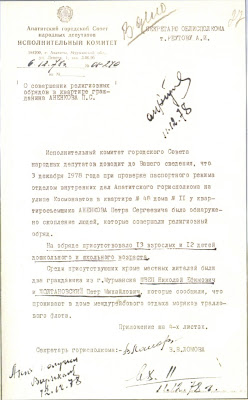 Meetings in Apatity at that time were conducted by Ivanov Stepan Ivanovich (Nina Stepanovna’s father). Peter Sergeevich for some time withdrew from meetings, fearing another arrest. But around the 1970s he returned to the ministry. The commissioner for religious affairs from Murmansk suggested that this group register. Registration in those years meant state control over the religious organization and severely restricted religious freedom. Therefore many communities refused such registration. On the other hand, it was the only opportunity to legally gather for joint confession of faith. The Apatity group agreed to registration in 1980. A small house, slated for demolition for firewood, was purchased at the address: Apatity, Kirova St., 3. Meetings began to be held there legally. Annenko Peter Sergeevich became the presbyter of this Church of Evangelical Christian Baptists.
Evangelical Community in Kirovsk.
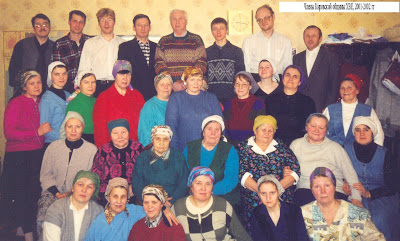
The Kirovsk community continued to remain in an illegal position. Believers prayed for the building up of the Church and the salvation of sinners. The community in Kirovsk began to grow little by little, and in 1989 several more sisters came to faith.
Longed-for Freedom.
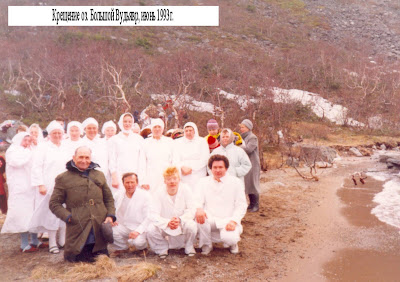 Amazing changes took place in our country. In 1990, the Supreme Soviet of the USSR repealed the anti-religious laws in force since 1918 and 1929, and adopted new legislation giving religious organizations the opportunity for restoration.
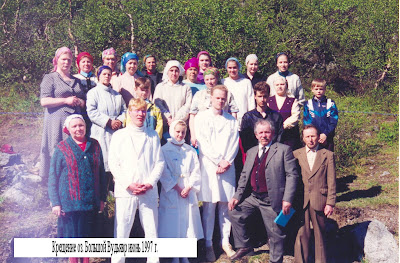
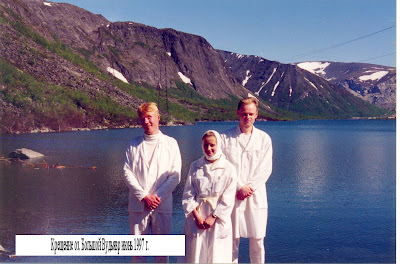
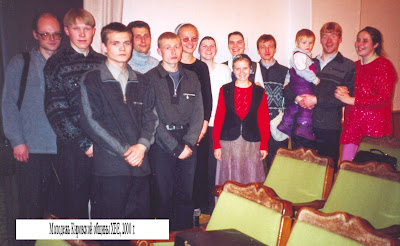
Freedom came, which the older generation of believers, who had gone through persecution and chains, could not even dream of. A wide door opened for the gospel. Evangelistic services began to be held throughout the region. People turned to God, and new churches began to form. In 1991, former prisoners of Soviet camps, people who had stood firm for their convictions during persecution, came to the north to work and teach the younger generation of believers: presbyter Demyanchuk Stepan Adamovich from Ivangorod, who had labored in Murmansk back in the years of persecution; Abramenko Vladimir Antonovich from Narva, Estonia, as well as other missionaries from the former Soviet Union.
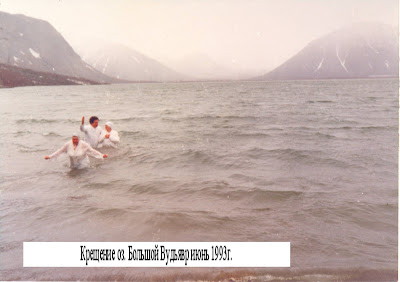 In 1992, a hall in the local Palace of Culture was rented in Kirovsk, and evangelistic services began. Ministers and missionaries from Murmansk began to come regularly to conduct meetings. The Kirovsk Church of Christians of Evangelical Faith (Pentecostals) grew. Its own ministers and preachers appeared in it. Several Christians from the Kirovsk community, who preserved their faith during persecution, became witnesses of the changes that took place in this community. It was the answer to their prayers and expectations. Nina Ivanovna Polozkova still attends meetings, remaining the oldest member of the local community of Christians of Evangelical Faith. Tatyana Timofeevna Dmitrova can no longer attend services due to poor health. Alexey Pavlovich Minzar and Nina Stepanovna Annenko are also living eyewitnesses of the events of those years.
Mutual Respect and Tolerance.
 In the Soviet Union, active Orthodox and Protestants were equally subjected to persecution and repression. Orthodox priests and Protestant ministers sat together in the same prisons and camps. Their views differed in many ways, but they were equally sufferers for faith in Christ. Evangelical Christians are law-abiding citizens, honest and conscientious workers. Their families, as a rule, are stable and often have many children. Christians of evangelical confession preserve and preach traditional moral values, and engage in social work.
 But today, voices are increasingly heard calling on the state and society to create a new standard thinking stereotype for all Russians, to support one Orthodox Church, to encourage its spread among the population of Russia, and to restrict the freedom of all “heterodox” people, who allegedly encroach upon the traditions of the Russian people and are so-called “sectarians,” foreign spies, and destroyers of society. To stir up public opinion, methods well tested and proven effective in the Soviet Union are used: slander and disinformation, inciting hatred and enmity through the mass media.
 It is greatly desired that knowledge of our history, the intertwining of its destinies, and the significance of its lessons would contribute to the development of mutual respect and tolerance for one another’s views and faith. That in our state, based on the Constitution of the Russian Federation, every person would have the right to be a believer or an atheist, to freely choose and change their views, to freely think and speak. That we would always remember that one person’s freedom ends where another’s freedom begins. It is greatly desired that not only health and material well-being would be desired values for our society, but also freedom of conscience, freedom of personality, and freedom of religion.
Maxim Evgenyevich Chernykh
Kirovsk, Murmansk Oblast
October 2008
This article and other materials on the history of the church.
Similar articles
- V. Franchuk. Persecution of Pentecostals in Khmelnitsky Oblast Commissioner of the Council for Religious Cults under the Council of Ministers of the Ukrainian SSR, Vilkhovy, August 26, 1954…
- Post‑war persecution and violence in Stalino (Donetsk) Oblast And suddenly I found a document in the Central State Archive of the Highest Organs of Power and the Highest…
- Pastor from Sudak: authorities orchestrate persecution of Christians According to the pastor of the “Source of Life” Church, Grigory Shamshur, the Sudak authorities have decided to persecute non‑Orthodox…
- Chairman of the Committee for Freedom of Conscience, Priest GLEB YAKUNIN: “This monstrous ‘vertical of power’ has rusted through… “Vladimir Oyvin”: Are you familiar with the situation regarding the seizure of churches from the Russian Orthodox Autonomous Church (ROAC)…
- Appeal of the assistants to the senior presbyter of VSEKhB for Dnepropetrovsk Oblast, N.K. Akritov, G.G. Ponurko, and M.S. Buta, to the congregations of Evangelical Christians‑Baptists and Christians of the Evangelical Faith December 18, 1956. Dear brothers and sisters! The year 1956 was marked by abundant blessings from the Lord in…
- The work of Ponomarchuk, Ponurko, and Buta with VSEKhB in Dnepropetrovsk Oblast In 1949, only two issues of “Bratsky Vestnik” were published. The last issue was almost entirely devoted to…
- A brief history of VSEKh — the brotherhood of Evangelical Christians “God, who commanded light to shine out of darkness, has shone in our hearts to give the light of the knowledge of the glory of God…
- Appeal of G.G. Ponurko and S.M. Buta to all brothers and sisters from the Christians of the Evangelical Faith who have not joined the united union of Evangelical Christians‑Baptists A letter of renunciation by the first “bishop” of Pentecostals, Gavriil Ponurko, approved by the Reichskommissar of Ukraine, Erich Koch, and another Pentecostal presbyter…
- Baptists against the Soviets: ecclesiastical freedom without compromise On July 15, 2007, Gennady Kryuchkov died — one of the most courageous Christian leaders, who did not…
- Film Witness (2 parts). Boris Perchatkin – witness to the genocide of Christians in the USSR before the government and people of the USA Why was Boris Perchatkin chosen by the people of the USA in the case of defending God’s people, and not because of…
- M. A. Fedorova. On believers in Sverdlovsk Oblast: Report of the Commissioner for Religious Cults under the USSR Government (1954) This publication presents a document on the activities of the commissioner for Sverdlovsk Oblast of the Council for Religious…
- Video: Avramenko’s slander, persecution of the 1960s, and the purpose of leading God’s people out My testimony about the slanderous book against Pentecostals and the Holy Spirit by Grigory Avramenko‑Agntsev, the persecution of the 1960s,…